“You’re actually going to eat those?” my friend asked, eyeing the bright green leaves I had just tossed into my basket. Honestly, I was skeptical myself. Dandelions have always been those stubborn weeds I tried to keep out of my garden, not something I pictured on my dinner plate. But that early spring afternoon, while wandering through a patch of wild greens, I caught a whiff of that unmistakably fresh, slightly bitter aroma. It was oddly inviting.
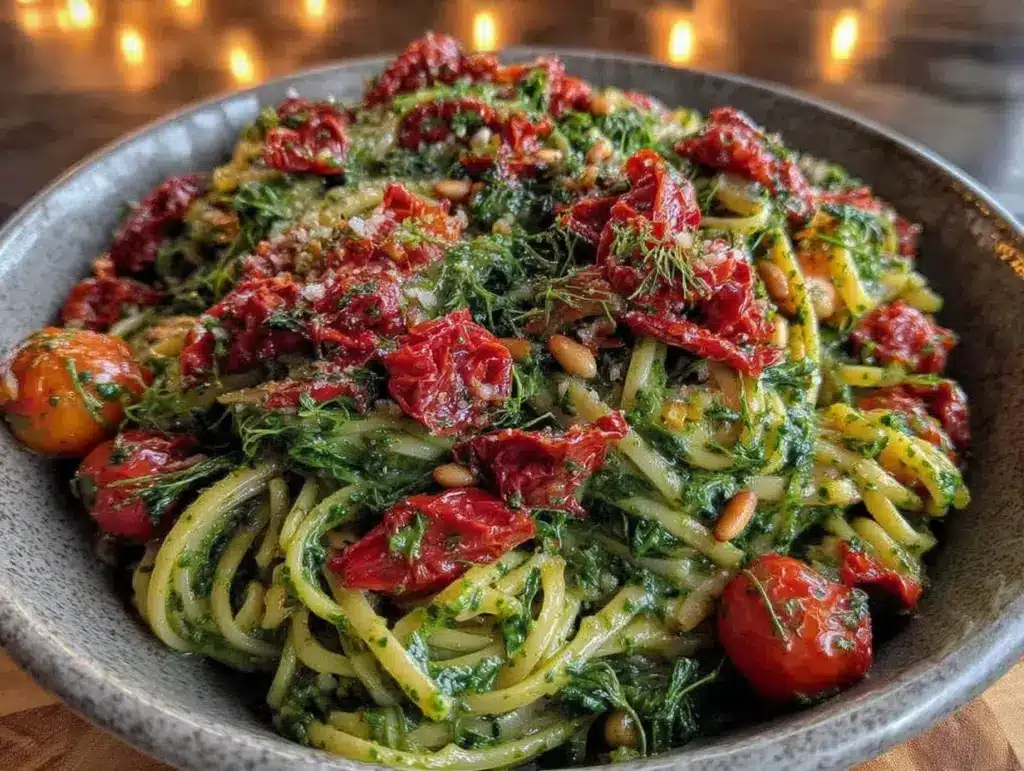
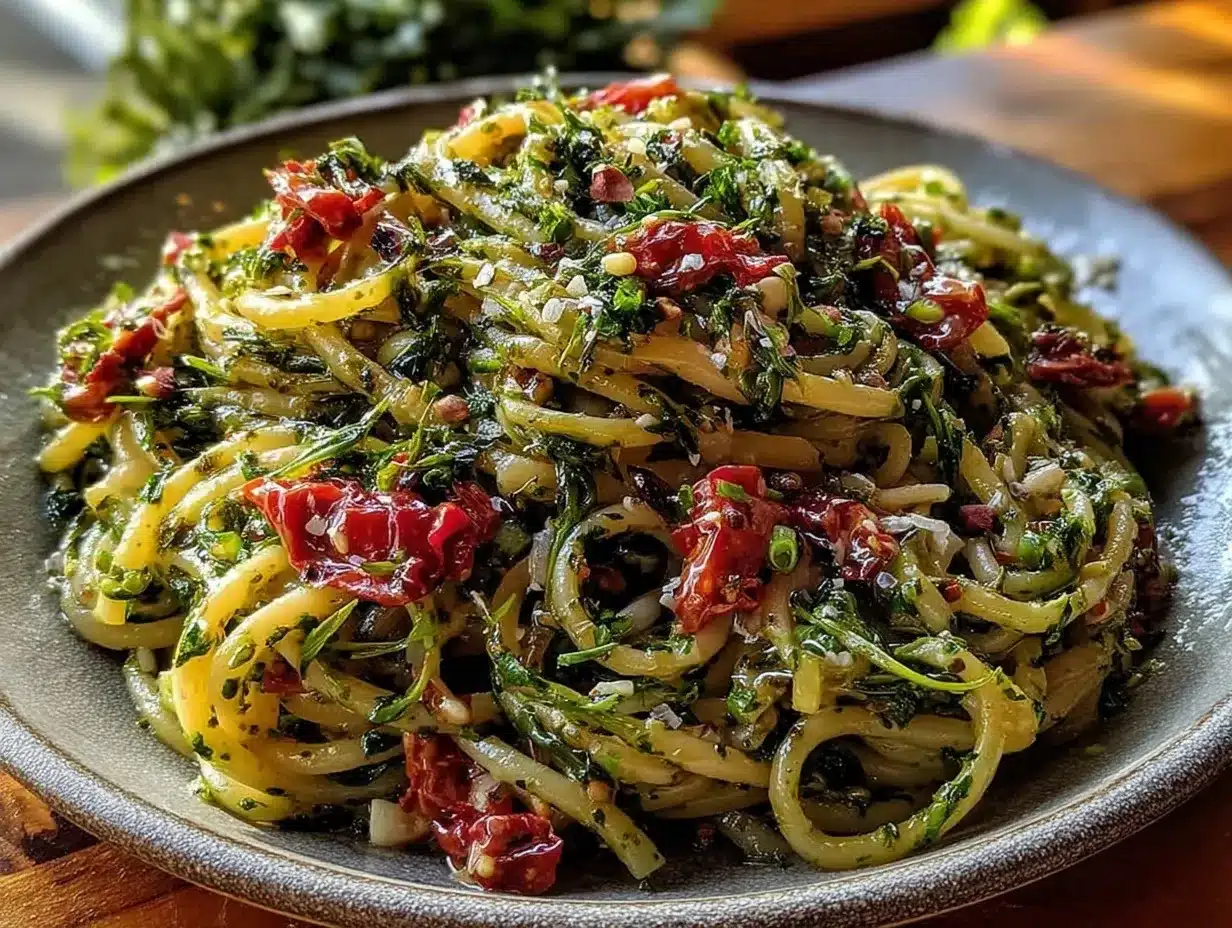
That day, I found myself experimenting with a batch of fresh dandelion leaves, blending them into a vibrant pesto with toasted pine nuts, garlic, and a splash of lemon. The sun-dried tomatoes I had on hand added a punch of sweet tang that balanced out the bitterness perfectly. When I tossed it with some al dente pasta, the result was unexpectedly bright, earthy, and satisfying—like spring captured in a bowl.
Since then, this fresh dandelion pesto pasta with sun-dried tomatoes has become my go-to for an easy, flavorful meal that feels both adventurous and comforting. It’s the kind of recipe that sneaks up on you in the best way—simple ingredients, quick prep, and a flavor profile that makes you pause and savor. Plus, it’s a fun way to use wild foraged greens that you might otherwise overlook.
Every time I make it, I’m reminded why it stuck with me—not just because it’s tasty, but because it’s a small reminder that good food doesn’t have to come from the usual suspects. Sometimes, it’s the unexpected ingredients that make a meal memorable.
Why You’ll Love This Fresh Dandelion Pesto Pasta Recipe
From my many kitchen trials and weekly dinners, this fresh dandelion pesto pasta has earned a special spot in my recipe rotation. Here’s why it’s worth making—and making often:
- Quick & Easy: Ready in about 25 minutes, this recipe fits perfectly into busy weeknights or when you want something fresh without fuss.
- Simple Ingredients: No need for hard-to-find items. You probably have garlic, olive oil, and sun-dried tomatoes in your pantry already.
- Perfect for Spring & Early Summer: It celebrates seasonal greens in a way that feels fresh and vibrant.
- Crowd-Pleaser: The unique pesto flavor surprises guests but always gets compliments—whether you’re serving friends or family.
- Unbelievably Delicious: That balance between the slightly bitter dandelion, sweet sun-dried tomatoes, and nutty pesto is honestly next-level comfort food.
This isn’t your typical basil pesto pasta. The fresh dandelion leaves give the sauce a distinct flavor that’s green and robust, yet the sun-dried tomatoes add a lovely sweetness that rounds it out without overpowering. I love how the pine nuts toast up just right, giving the pesto a subtle crunch and depth.
What sets this recipe apart is the embrace of an ingredient many shy away from. It’s a little wild, a little unexpected, and a whole lot of delicious. Whether you’re looking to impress with a unique dish or just want to switch up your pasta game, this recipe delivers.
What Ingredients You Will Need
This recipe uses simple, wholesome ingredients to deliver bold flavor and satisfying texture without the fuss. Most are pantry staples, with the star being the fresh dandelion leaves—you can find them at farmers’ markets or gather responsibly from safe, pesticide-free areas. Here’s what you’ll want to gather:
- Fresh dandelion greens, about 3 cups packed (young leaves work best—less bitter)
- Sun-dried tomatoes, 1/2 cup, chopped (oil-packed preferred for richer flavor)
- Pine nuts, 1/4 cup, toasted (I recommend using Fagol pine nuts for consistent texture)
- Garlic cloves, 2 large, peeled
- Extra virgin olive oil, 1/3 cup (choose a fruity, high-quality brand like Colavita)
- Fresh lemon juice, 1 tablespoon (brightens the pesto)
- Grated Parmesan cheese, 1/4 cup (optional, or use a vegetarian hard cheese alternative)
- Salt, to taste
- Black pepper, freshly ground, to taste
- Pasta, 12 ounces (340 grams), such as spaghetti, linguine, or your favorite shape
If you want to customize the pesto, you can swap pine nuts for walnuts or almonds. For a dairy-free version, omit the Parmesan or replace it with nutritional yeast. And if fresh dandelion greens aren’t available, you can try baby kale or arugula for a somewhat similar peppery note, but the charm of dandelion is hard to beat.
Equipment Needed
- Food processor or blender: Essential for making the pesto smooth and creamy. I’ve used both, but a food processor gives you better control over texture.
- Large pot: For boiling the pasta—choose one with plenty of room to avoid sticking.
- Colander: To drain the pasta.
- Toaster pan or skillet: For toasting pine nuts—watch closely as they can burn quickly.
- Measuring cups and spoons: For ingredient accuracy.
- Wooden spoon or tongs: To toss the pasta with the pesto.
If you don’t have a food processor, a sturdy blender can work, but you may need to pulse and scrape the sides often. For toasting pine nuts, a dry skillet over medium-low heat is budget-friendly and reliable. I keep a small silicone spatula handy to stir them evenly.
Preparation Method
- Prepare the dandelion greens: Rinse 3 cups of fresh dandelion leaves thoroughly under cold water to remove any grit. Pat dry with paper towels or spin in a salad spinner. Remove any thick stems that might be tough. (About 5 minutes)
- Toast the pine nuts: Heat a dry skillet over medium-low heat. Add 1/4 cup pine nuts and toast, stirring frequently, until golden and fragrant—usually 3-4 minutes. Be careful, as they burn fast. Remove from heat and let cool. (5 minutes)
- Cook the pasta: Bring a large pot of salted water to a boil. Add 12 ounces (340 g) of your chosen pasta and cook according to package instructions until al dente, usually 8-10 minutes. Reserve about 1/2 cup of pasta cooking water before draining. (10 minutes)
- Make the pesto: In a food processor, combine the dandelion greens, toasted pine nuts, 2 peeled garlic cloves, and 1/2 cup chopped sun-dried tomatoes. Pulse a few times to roughly chop.
- Add olive oil and lemon juice: With the processor running, slowly stream in 1/3 cup extra virgin olive oil and 1 tablespoon fresh lemon juice. Process until smooth but still a bit textured—scrape down the sides if needed.
- Incorporate cheese and seasoning: Add 1/4 cup grated Parmesan cheese (or alternative) and pulse a couple of times. Season with salt and freshly ground black pepper to taste. If the pesto is too thick, add a tablespoon or two of reserved pasta water to loosen it up.
- Toss pasta with pesto: Return the drained pasta to the pot or a large bowl. Add the pesto and toss together until the noodles are evenly coated. Adjust seasoning if necessary. Add more pasta water if you want a silkier sauce.
- Serve: Divide pasta among plates and garnish with extra sun-dried tomatoes or a sprinkle of Parmesan. Enjoy warm for the best flavor.
Tip: The pesto keeps for up to 3 days refrigerated in an airtight container—great for quick lunches. Just stir in a little olive oil before using.
Cooking Tips & Techniques
One of the trickiest parts of this recipe is getting the dandelion greens just right. Too mature, and they can be overly bitter; too young, and you might miss some of that earthy punch that makes this pesto special. I’ve learned to pick tender leaves and combine them with the sweetness of sun-dried tomatoes to balance that bitterness.
Toasting pine nuts is another spot where attention matters. I once left them unattended and ended up with a smoky mess. So I now keep a close eye, stirring regularly, and turn off the heat just as they start to brown. That little nutty crunch makes all the difference.
When tossing the pasta, never add the pesto to a dry pot. Use reserved pasta water to loosen the sauce—it helps the pesto cling to every strand, creating that perfect, silky coating.
For garlic, I recommend fresh cloves over pre-minced. The flavor is sharper and fresher, which holds up well against the bold greens and tomatoes.
And finally, don’t skip the lemon juice. It brightens the whole dish and cuts through the richness of the olive oil and cheese.
Variations & Adaptations
- Gluten-free option: Swap regular pasta for your favorite gluten-free noodles or even spiralized zucchini for a low-carb twist.
- Nut-free version: Replace pine nuts with toasted pumpkin seeds or sunflower seeds for a similar texture and flavor.
- Vegan adaptation: Omit the Parmesan and use nutritional yeast instead; add a touch more lemon juice for brightness.
- Seasonal swap: In late summer, consider swapping sun-dried tomatoes for fresh cherry tomatoes lightly sautéed for a sweeter, fresher finish.
- For extra protein: Toss in grilled chicken strips or sautéed shrimp—works wonderfully with the pesto’s herbal notes.
Personally, I once tried adding a handful of fresh basil along with dandelion leaves, and it gave the pesto a milder, more familiar flavor—which can be a good stepping stone if you’re new to foraged greens.
Serving & Storage Suggestions
This pasta is best served warm right after tossing so the pesto clings perfectly to the noodles. I like to plate it simply with a light drizzle of olive oil and a few extra sun-dried tomato pieces on top for a pop of color.
It pairs wonderfully with a crisp, fresh salad like a southwest chipotle salad to contrast the herbaceous pesto.
If you have leftovers, store them in an airtight container in the fridge for up to 2 days. When reheating, add a splash of water or olive oil and warm gently in a pan over low heat to avoid drying out the pasta.
Flavors deepen a bit after resting, so sometimes I make the pesto a day ahead—it mellows and melds beautifully overnight.
Nutritional Information & Benefits
This fresh dandelion pesto pasta is a nutrient-packed meal that offers more than just vibrant taste. Dandelion greens are rich in vitamins A, C, and K, plus antioxidants and fiber, supporting digestion and immune health. The olive oil provides heart-healthy monounsaturated fats, while pine nuts add protein and essential minerals like magnesium.
With about 450 calories per serving (based on 4 servings), it’s a balanced choice that doesn’t skimp on flavor or nourishment. It’s naturally gluten-free if you choose the right pasta, and with substitutions, can fit vegan and nut-free diets as well.
Conclusion
This fresh dandelion pesto pasta with sun-dried tomatoes isn’t just another pasta dish—it’s a celebration of spring’s wild flavors and simple kitchen magic. I keep coming back to it because it’s quick, satisfying, and just a little bit unexpected—the kind of recipe that makes you rethink what a pesto can be.
Feel free to tweak it—swap nuts, try different greens, or add your favorite protein. It’s flexible and forgiving, which is why it’s become a favorite in my kitchen. If you ever need a fresh, speedy meal that packs a punch, this one’s got your back.
And hey, if you ever want a cozy pasta salad twist, the creamy chicken Caesar pasta salad recipe on the blog is a great next try to keep those dinner ideas flowing.
FAQs About Fresh Dandelion Pesto Pasta with Sun-Dried Tomatoes
Can I use dried dandelion leaves instead of fresh?
Dried dandelion leaves are generally too bitter and tough for pesto. Fresh leaves are recommended for the best flavor and texture.
Where can I find fresh dandelion greens?
Farmers’ markets often have them in spring, or you can forage responsibly in pesticide-free areas. Just be sure to identify them correctly!
How do I store leftover pesto?
Store pesto in an airtight container in the fridge for up to 3 days. Pour a thin layer of olive oil on top to help prevent browning.
Can I freeze the pesto?
Yes! Freeze pesto in ice cube trays, then transfer cubes to a freezer bag. Use within 2 months for best flavor.
What pasta shapes work best with this pesto?
Long noodles like linguine or spaghetti work great, but short shapes like penne or fusilli hold the sauce well too. Choose what you like!
Pin This Recipe!
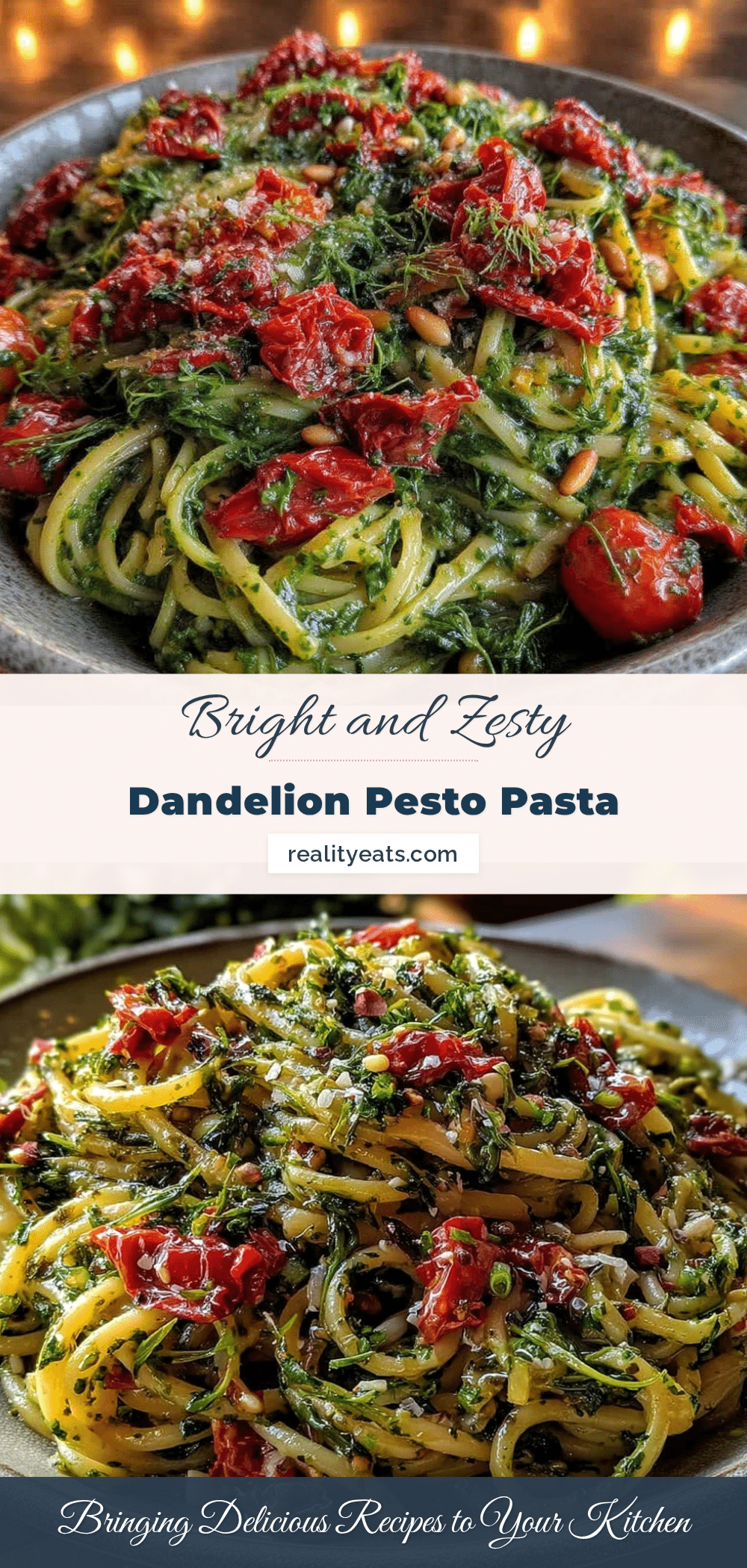
Fresh Dandelion Pesto Pasta with Sun-Dried Tomatoes
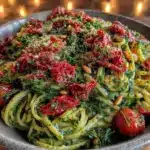
A vibrant and flavorful pasta dish featuring fresh dandelion greens blended into a unique pesto with toasted pine nuts, garlic, lemon, and sun-dried tomatoes. Quick and easy to prepare, this recipe celebrates seasonal wild greens with a bright, earthy taste.
- Prep Time: 10 minutes
- Cook Time: 15 minutes
- Total Time: 25 minutes
- Yield: 4 servings 1x
- Category: Main Course
- Cuisine: Italian-inspired
Ingredients
- 3 cups fresh dandelion greens, packed (young leaves preferred)
- 1/2 cup sun-dried tomatoes, chopped (oil-packed preferred)
- 1/4 cup pine nuts, toasted
- 2 large garlic cloves, peeled
- 1/3 cup extra virgin olive oil
- 1 tablespoon fresh lemon juice
- 1/4 cup grated Parmesan cheese (optional or vegetarian alternative)
- Salt, to taste
- Freshly ground black pepper, to taste
- 12 ounces pasta (spaghetti, linguine, or preferred shape)
Instructions
- Rinse 3 cups of fresh dandelion leaves thoroughly under cold water to remove any grit. Pat dry with paper towels or spin in a salad spinner. Remove any thick stems that might be tough.
- Heat a dry skillet over medium-low heat. Add 1/4 cup pine nuts and toast, stirring frequently, until golden and fragrant (3-4 minutes). Remove from heat and let cool.
- Bring a large pot of salted water to a boil. Add 12 ounces of pasta and cook according to package instructions until al dente (8-10 minutes). Reserve about 1/2 cup of pasta cooking water before draining.
- In a food processor, combine dandelion greens, toasted pine nuts, 2 garlic cloves, and 1/2 cup chopped sun-dried tomatoes. Pulse a few times to roughly chop.
- With the processor running, slowly stream in 1/3 cup extra virgin olive oil and 1 tablespoon fresh lemon juice. Process until smooth but still a bit textured, scraping down the sides if needed.
- Add 1/4 cup grated Parmesan cheese and pulse a couple of times. Season with salt and freshly ground black pepper to taste. If pesto is too thick, add reserved pasta water a tablespoon at a time to loosen.
- Return drained pasta to the pot or a large bowl. Add pesto and toss until noodles are evenly coated. Adjust seasoning and add more pasta water if needed for a silky sauce.
- Divide pasta among plates and garnish with extra sun-dried tomatoes or a sprinkle of Parmesan. Serve warm.
Notes
Use young dandelion leaves to avoid excessive bitterness. Toast pine nuts carefully to prevent burning. Use reserved pasta water to loosen pesto and help it cling to pasta. For vegan version, omit Parmesan or substitute with nutritional yeast. Gluten-free pasta or spiralized zucchini can be used for gluten-free or low-carb options.
Nutrition
- Serving Size: About 1 cup pasta wi
- Calories: 450
- Sugar: 4
- Sodium: 350
- Fat: 28
- Saturated Fat: 4
- Carbohydrates: 38
- Fiber: 4
- Protein: 12
Keywords: dandelion pesto, pasta recipe, sun-dried tomatoes, pine nuts, easy pesto, wild greens, spring recipe, vegetarian pasta