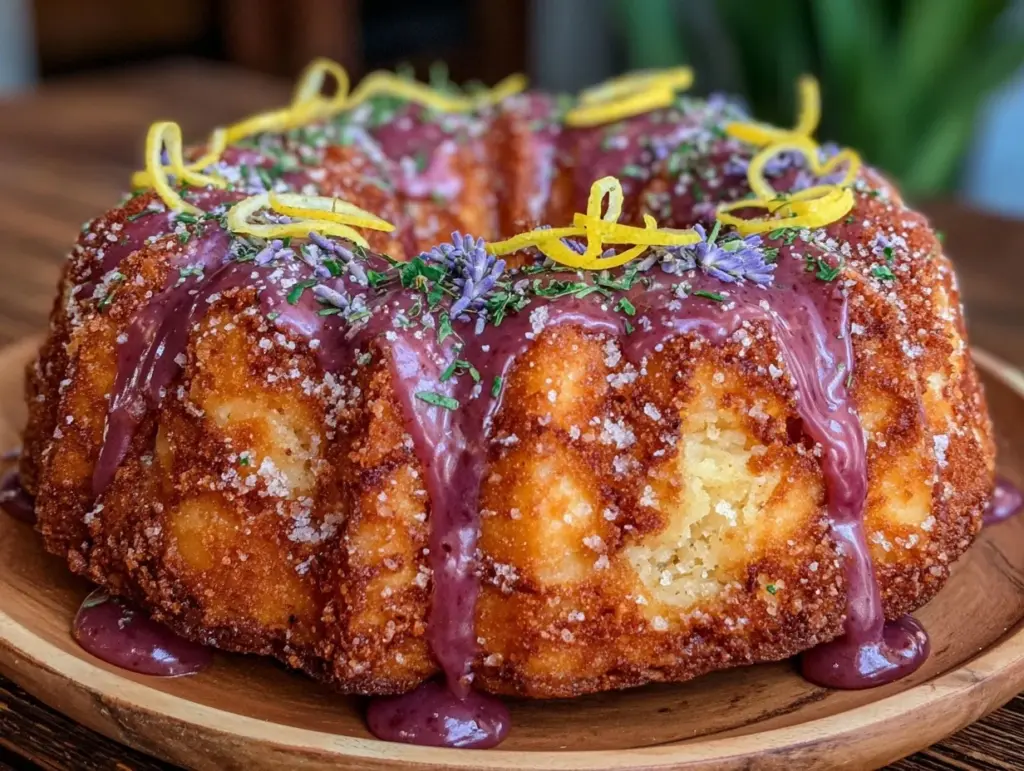
“Are you sure that lavender belongs in a cake?” my friend asked, eyeing the small jar of dried lavender buds in my kitchen like it was some exotic spice reserved for potions. Honestly, I wasn’t convinced either the first time I stumbled on this Perfect Lemon Lavender Bundt Cake with Silky Purple Glaze. It started on one of those late spring afternoons when life had me feeling a bit off—too much noise, too little calm. I was rummaging through my pantry, looking for something simple yet soothing to bake. And then there it was: a forgotten bag of culinary lavender, purchased on a whimsical impulse but never quite used.
The scent of lemon zest mingled with the subtle floral notes of lavender as the batter came together, filling the kitchen with a surprisingly comforting aroma. It wasn’t just any cake; this one felt like a quiet moment captured in dessert form. The glaze, with its delicate purple hue, was an accidental masterpiece—a happy accident born from mixing powdered sugar with a bit of lavender-infused milk. It wasn’t flashy, but it had this understated charm that made me pause.
After sharing slices with a few friends (who, by the way, immediately asked for the recipe), I realized this cake was more than just a treat; it was a reminder to find beauty in small, unexpected moments. It’s perfect for those times when you want something a little different but not fussy. And honestly, it’s stuck with me ever since—quiet, elegant, and just a bit magical.
Why You’ll Love This Recipe
From my many attempts and tweaks, this Perfect Lemon Lavender Bundt Cake has become a go-to for whenever I crave something fresh yet comforting. It’s the kind of recipe that feels fancy without needing a ton of effort or hard-to-find ingredients.
- Quick & Easy: You can have this cake ready in about an hour, including baking time. Great for last-minute gatherings or when you just want to treat yourself without hours in the kitchen.
- Simple Ingredients: Most are pantry staples—flour, sugar, eggs, and butter—with the lovely addition of dried lavender and fresh lemons, which add that unique twist without complexity.
- Perfect for Special Occasions: Whether it’s a spring brunch, afternoon tea, or a casual weekend dessert, this cake fits right in with its delicate flavor and pretty presentation.
- Crowd-Pleaser: I’ve brought this cake to potlucks and family dinners, and it’s always met with curious smiles and requests for seconds. Even lavender skeptics come around.
- Unbelievably Delicious: The balance of zesty lemon and floral lavender is subtle yet unmistakable, and the silky purple glaze adds just the right amount of sweetness and moisture.
What makes it stand out? It’s not just a lemon cake with lavender sprinkled on top. The lavender is infused gently into the batter and the glaze, giving it a smooth, fragrant depth. Plus, using a bundt pan means you get this beautiful, rustic shape that’s perfect for gifting or serving at any table.
Honestly, it’s the kind of recipe that makes you pause, close your eyes, and savor every bite. If you appreciate desserts like the cozy cranberry-orange pecan crisp for their balance of flavors and comfort, this lemon lavender bundt cake will feel right at home.
What Ingredients You Will Need
This recipe relies on a handful of wholesome, easy-to-find ingredients that come together to create a cake bursting with bright lemon notes and subtle floral whispers. The ingredients also lend themselves well to simple swaps if needed.
- All-purpose flour: 2 ½ cups (315 grams) – the base for a tender crumb. I prefer King Arthur for consistent results.
- Baking powder: 2 ½ teaspoons – for lift and lightness.
- Salt: ½ teaspoon – balances the sweetness.
- Granulated sugar: 1 ¾ cups (350 grams) – adds sweetness and structure.
- Unsalted butter: 1 cup (227 grams), softened – for moisture and richness.
- Large eggs: 4, at room temperature – helps bind and enrich the cake.
- Fresh lemons: 2, zested and juiced – gives that unmistakable zing. I always use organic when zesting.
- Dried culinary lavender buds: 2 teaspoons, finely crushed – the star floral note. Look for food-grade lavender (Lavender Valley is a reliable brand).
- Whole milk: ¾ cup (180 ml) – adds tenderness.
- Vanilla extract: 1 teaspoon – rounds out the flavors.
For the silky purple glaze:
- Powdered sugar: 1 cup (120 grams) – smooth sweetness.
- Milk infused with lavender: 2 tablespoons (30 ml) – made by steeping 1 teaspoon of dried lavender in warm milk for 10 minutes, then strained. This gives the glaze its delicate purple hue and floral aroma.
- Fresh lemon juice: 1 tablespoon – brightens the glaze.
If you need a gluten-free option, swapping the flour for a 1-to-1 gluten-free baking blend works well. For dairy-free, use coconut oil instead of butter and almond or oat milk for the glaze. I’ve tried these swaps with success, though the texture shifts slightly.
Equipment Needed
- Bundt pan (10-inch/25 cm): Essential for the cake’s classic shape. A non-stick pan makes unmolding easier, but greasing well with butter and flour works too.
- Electric mixer: While you can mix by hand, a stand or hand mixer speeds up creaming butter and sugar smoothly.
- Mixing bowls: At least two – for dry and wet ingredients.
- Microplane or fine grater: For zesting lemons finely.
- Measuring cups and spoons: Accurate measurement is key to success.
- Fine mesh strainer: To sift powdered sugar for the glaze and strain lavender buds from milk.
- Spatula and wooden spoon: For folding batter gently.
Personally, I keep a silicone bundt pan in my kitchen—it’s budget-friendly and cleans quickly, which is a win in my book. If you don’t have a bundt pan, using a tube pan or even a loaf pan works, though the shape and baking time will vary.
Preparation Method
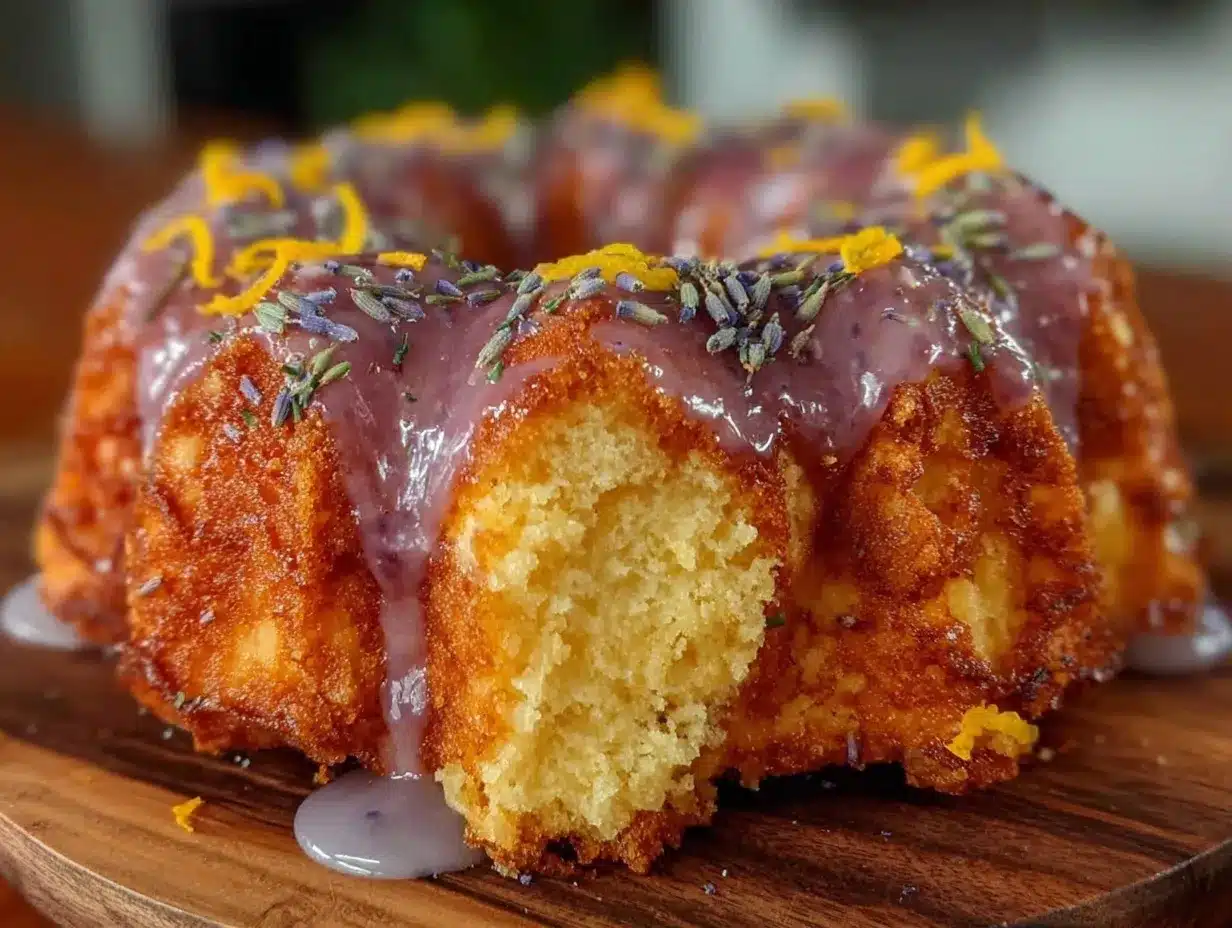
- Prepare the pan and preheat oven: Grease your bundt pan thoroughly with butter and dust with flour or use a baking spray with flour. Preheat your oven to 350°F (175°C). This step prevents sticking—trust me, it makes unmolding a breeze. (5 minutes)
- Mix dry ingredients: In a medium bowl, whisk together 2 ½ cups (315 g) all-purpose flour, 2 ½ teaspoons baking powder, ½ teaspoon salt, and 2 teaspoons crushed dried lavender buds. This ensures even distribution. (3 minutes)
- Cream butter and sugar: In a large bowl, beat 1 cup (227 g) softened unsalted butter with 1 ¾ cups (350 g) granulated sugar on medium speed until light and fluffy. This usually takes about 4-5 minutes—don’t rush this part. (5 minutes)
- Add eggs one at a time: Beat in 4 large eggs, one at a time, mixing well after each addition. This helps with emulsion and texture. (3 minutes)
- Add lemon zest and vanilla: Stir in zest of 2 lemons and 1 teaspoon vanilla extract. These bring brightness and depth to the cake. (1 minute)
- Alternate adding dry ingredients and milk: With the mixer on low, add the flour mixture in three additions, alternating with ¾ cup (180 ml) whole milk, beginning and ending with flour. Mix until just combined—overmixing can make the cake tough! (5 minutes)
- Pour batter into pan: Scrape the batter into your prepared bundt pan, smoothing the top with a spatula. Tap the pan gently on the counter to release air bubbles. (2 minutes)
- Bake: Place in the oven and bake at 350°F (175°C) for 50-60 minutes, or until a toothpick inserted near the center comes out clean. The cake should be golden and spring back lightly when touched. (50-60 minutes)
- Cool: Let the cake cool in the pan for 15 minutes before carefully inverting onto a wire rack to cool completely. This stops the cake from breaking and keeps it moist. (15 minutes)
- Make the glaze: While the cake cools, steep 1 teaspoon dried lavender in 2 tablespoons warm milk for 10 minutes, then strain. Whisk 1 cup (120 g) sifted powdered sugar with the lavender-infused milk and 1 tablespoon fresh lemon juice until smooth and pourable. Adjust thickness with a bit more powdered sugar or milk if needed. (10-15 minutes)
- Glaze the cake: Drizzle the silky purple glaze over the cooled bundt cake, letting it drip down the sides naturally. Let it set for 20 minutes before slicing. (20 minutes)
Pro tip: If your glaze thickens too much while waiting, a quick stir and a splash of milk bring it back to perfect drizzling consistency. Also, be patient when unmolding; an impatient poke can ruin that gorgeous shape.
Cooking Tips & Techniques
One trick I learned the hard way is to never skip the step of properly greasing and flouring the bundt pan. It may seem tedious, but it’s the difference between a smooth release and a crumbly mess. I once lost a whole cake to stubborn sticking—lesson learned!
When mixing your batter, slow and steady wins the race. Overmixing flour can lead to a dense, chewy cake. I always mix just until the dry ingredients disappear, then stop.
For the lavender, crushing the buds finely before mixing helps distribute the flavor more evenly without biting into larger, more intense pieces. If you’re worried about the floral taste overpowering, start with a bit less and adjust next time.
Timing your glaze is also key. It should be cool but still pourable. If it’s too warm, it will run off the cake too quickly; too cold, and it won’t spread nicely. Preparing the glaze while the cake cools is a great way to multitask.
Lastly, slicing the cake with a serrated knife, using a gentle sawing motion, keeps each piece neat and prevents tearing. This is especially important if you’re serving this elegant cake at a gathering or tea party.
Variations & Adaptations
This lemon lavender bundt cake is wonderfully versatile, and you can make it your own with a few tweaks.
- Honey Lavender Variation: Replace half the granulated sugar with ½ cup (120 ml) honey for a richer sweetness and a hint of floral depth that pairs beautifully with lavender.
- Blueberry Addition: Fold in 1 cup (150 g) fresh or frozen blueberries to the batter for a burst of juicy fruit. This adds a pop of color and a complementary flavor to the lemon and lavender.
- Gluten-Free Version: Swap all-purpose flour with a 1:1 gluten-free baking blend. Add ½ teaspoon xanthan gum if your blend doesn’t contain it to help with structure.
- Vegan Adaptation: Use flax eggs (4 tablespoons ground flaxseed mixed with 12 tablespoons water, set for 5 minutes), coconut oil instead of butter, and almond or oat milk in place of dairy milk. The flavor is slightly different but still delightful.
- Lavender-Free Option: If lavender isn’t your thing, swap it for 1 teaspoon finely chopped fresh rosemary for an herbaceous twist that still pairs well with lemon.
One personal favorite is the blueberry version—I made it for a spring brunch and the guests loved the surprise bursts of fruit. It’s a great way to customize the cake for the season or your pantry.
Serving & Storage Suggestions
This cake tastes best served at room temperature, allowing the lemon and lavender flavors to fully bloom. Pair it with a cup of Earl Grey tea or a chilled glass of sparkling lemonade for a refreshing combo.
For festive occasions, garnish the top with a few edible flowers or thin lemon slices for a pretty presentation. It also pairs nicely with a light whipped cream or a dollop of vanilla bean ice cream if you want to get a bit indulgent.
Store any leftovers wrapped tightly in plastic wrap or in an airtight container at room temperature for up to 3 days. The cake stays moist and flavorful, but just so you know, the glaze might lose a bit of its shine.
For longer storage, freeze the cake (unfrosted) wrapped well for up to 2 months. Thaw completely at room temperature, then add glaze before serving.
Flavors tend to deepen after a day, so if you have the patience to wait overnight, you’ll be rewarded with an even more harmonious taste.
Nutritional Information & Benefits
Each slice (assuming 12 slices per cake) contains approximately 320 calories, with moderate fat and sugar content typical for a dessert. The use of fresh lemon adds vitamin C, and lavender is known for its calming properties, making this cake a little more than just a sweet treat.
This recipe is naturally gluten-free adaptable and can be modified for dairy-free or vegan diets, making it accessible for many dietary preferences.
While it’s not a health food by any stretch, the balance of natural ingredients and absence of artificial flavors makes it a thoughtful choice when you want something special but not overly processed.
Personally, I appreciate that it feels like a little wellness moment wrapped in a cake—comfort food that doesn’t feel too heavy or overly sweet.
Conclusion
This Perfect Lemon Lavender Bundt Cake with Silky Purple Glaze has quietly become one of my favorite ways to share a little joy, whether it’s a weekend treat or a centerpiece for a gathering. The combination of lemon’s brightness with the gentle floral notes of lavender is just different enough to surprise and delight without being intimidating.
Feel free to make it your own—swap in your favorite citrus, add berries, or try a different glaze. It’s a forgiving recipe that invites creativity while offering dependable results.
I love how it always brings a moment of calm and sweetness, even on a hectic day. If you give it a try, I’d love to hear how you made it yours—leave a comment or share your tweaks!
Here’s to many cozy bites and quiet moments with a slice of this charming cake.
FAQs About Perfect Lemon Lavender Bundt Cake
Can I use fresh lavender instead of dried?
Yes, but use sparingly—about half the amount of dried lavender—since fresh lavender has a stronger flavor. Make sure it’s culinary grade and pesticide-free.
How do I keep the glaze from running off the cake?
Let the cake cool completely before glazing and ensure your glaze is thick enough to drip slowly. If it’s too runny, add more powdered sugar to thicken.
Can I make this cake ahead of time?
Absolutely! Bake it a day in advance, store it wrapped at room temperature, and add the glaze just before serving for the best texture.
What’s the best way to store leftover cake?
Keep leftovers in an airtight container at room temperature for up to 3 days or freeze the unfrosted cake for up to 2 months. Add glaze after thawing.
Is the lavender flavor strong?
No, it’s quite subtle and balanced by the lemon. The lavender adds a gentle floral note that complements rather than overwhelms.
Pin This Recipe!
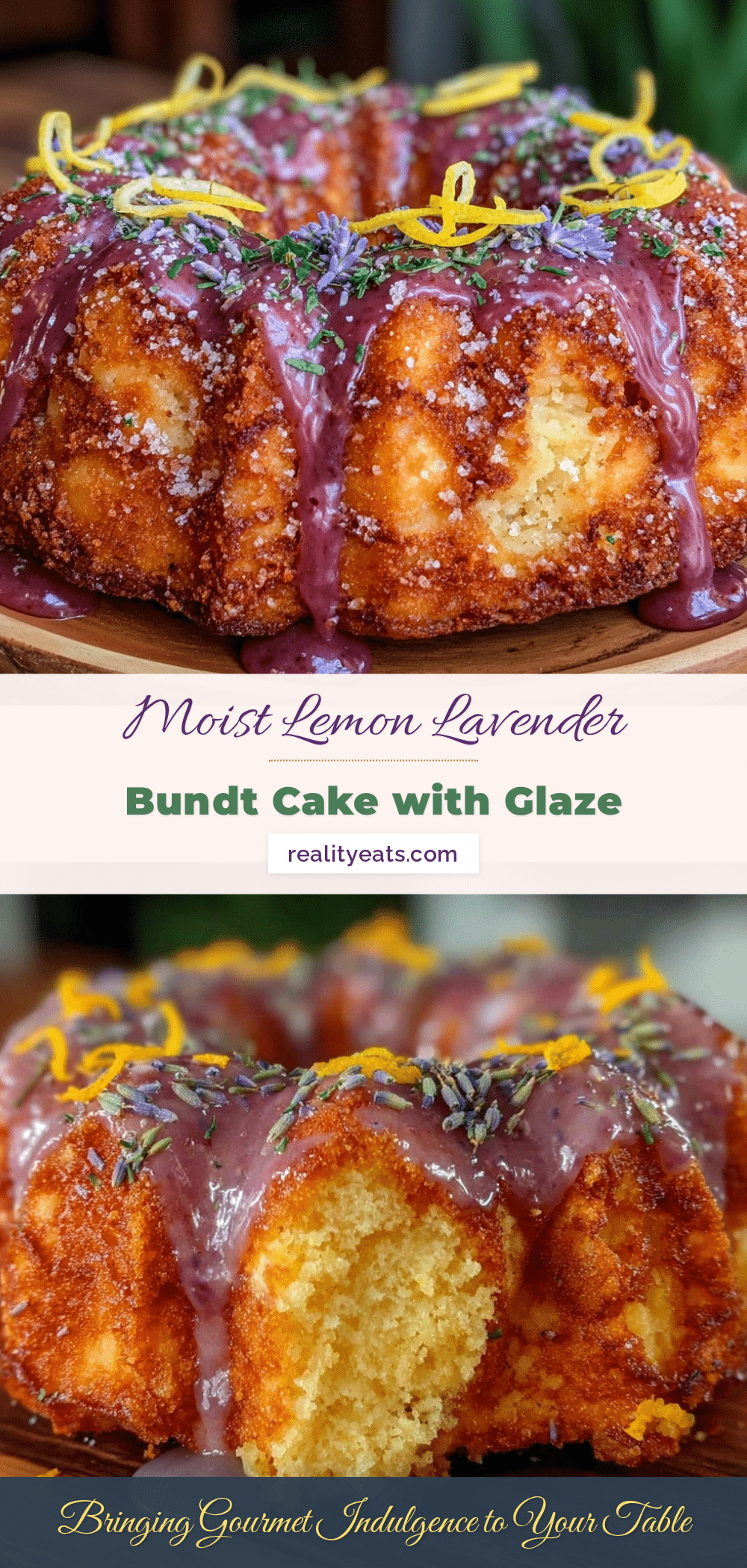
Perfect Lemon Lavender Bundt Cake with Silky Purple Glaze

A delicate and elegant lemon lavender bundt cake with a silky purple glaze, combining zesty lemon and subtle floral lavender for a comforting and unique dessert.
- Prep Time: 20 minutes
- Cook Time: 50-60 minutes
- Total Time: 1 hour 10-15 minutes
- Yield: 12 servings 1x
- Category: Dessert
- Cuisine: American
Ingredients
- 2 ½ cups (315 grams) all-purpose flour
- 2 ½ teaspoons baking powder
- ½ teaspoon salt
- 1 ¾ cups (350 grams) granulated sugar
- 1 cup (227 grams) unsalted butter, softened
- 4 large eggs, at room temperature
- Zest and juice of 2 fresh lemons
- 2 teaspoons dried culinary lavender buds, finely crushed
- ¾ cup (180 ml) whole milk
- 1 teaspoon vanilla extract
- For the glaze:
- 1 cup (120 grams) powdered sugar
- 2 tablespoons (30 ml) milk infused with 1 teaspoon dried lavender
- 1 tablespoon fresh lemon juice
Instructions
- Grease your bundt pan thoroughly with butter and dust with flour or use a baking spray with flour. Preheat your oven to 350°F (175°C).
- In a medium bowl, whisk together flour, baking powder, salt, and crushed dried lavender buds.
- In a large bowl, beat softened butter with granulated sugar on medium speed until light and fluffy, about 4-5 minutes.
- Beat in eggs one at a time, mixing well after each addition.
- Stir in lemon zest and vanilla extract.
- With the mixer on low, add the flour mixture in three additions, alternating with milk, beginning and ending with flour. Mix until just combined.
- Pour batter into prepared bundt pan, smoothing the top and tapping gently to release air bubbles.
- Bake at 350°F (175°C) for 50-60 minutes, or until a toothpick inserted near the center comes out clean.
- Let the cake cool in the pan for 15 minutes, then invert onto a wire rack to cool completely.
- While the cake cools, steep 1 teaspoon dried lavender in 2 tablespoons warm milk for 10 minutes, then strain.
- Whisk powdered sugar with lavender-infused milk and lemon juice until smooth and pourable, adjusting thickness if needed.
- Drizzle the glaze over the cooled cake and let it set for 20 minutes before slicing.
Notes
Properly grease and flour the bundt pan to prevent sticking. Mix batter just until dry ingredients disappear to avoid toughness. Crush lavender buds finely for even flavor distribution. Prepare glaze while cake cools and ensure glaze is thick enough to drip slowly. Use a serrated knife to slice for neat pieces. For gluten-free, use 1:1 gluten-free baking blend and add xanthan gum if needed. For dairy-free or vegan, substitute butter with coconut oil and milk with almond or oat milk; use flax eggs for vegan adaptation.
Nutrition
- Serving Size: 1 slice (1/12 of cak
- Calories: 320
- Sugar: 28
- Sodium: 210
- Fat: 14
- Saturated Fat: 8
- Carbohydrates: 44
- Fiber: 1
- Protein: 4
Keywords: lemon cake, lavender cake, bundt cake, lemon lavender dessert, floral cake, spring dessert, easy cake recipe, homemade cake