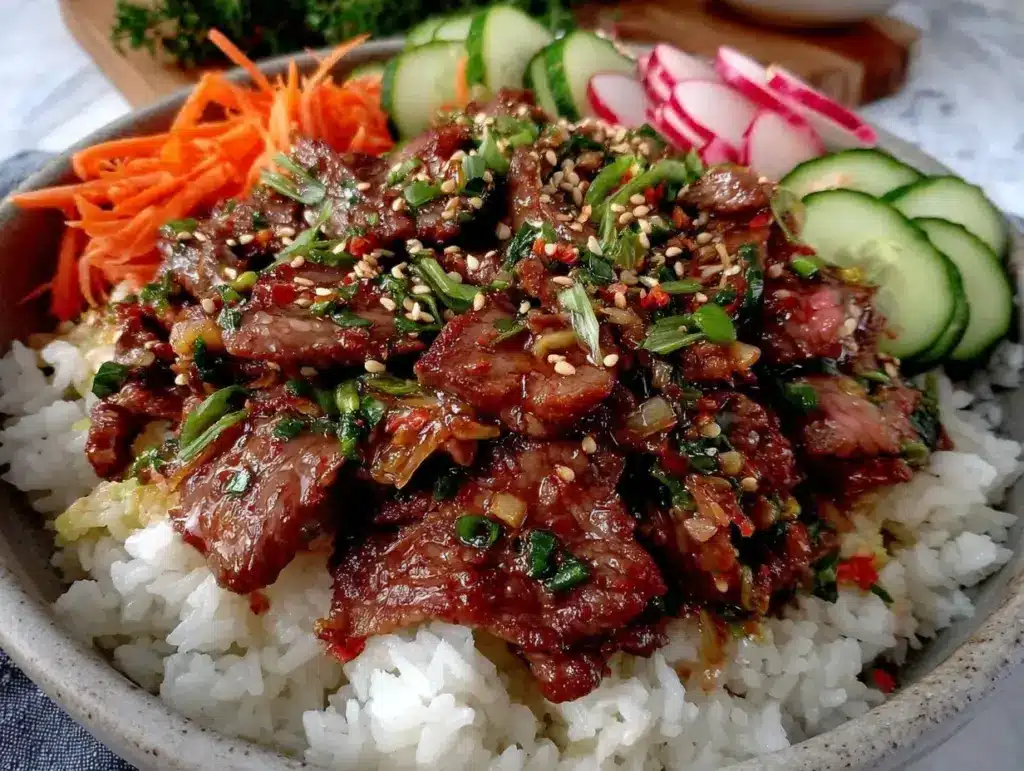
“You sure this is going to taste good?” my roommate asked skeptically while I was tossing together the marinade. Honestly, I didn’t blame her—I’d never attempted Korean bulgogi before, and the idea of marinating thin slices of beef in what looked like a random mix of soy sauce, sugar, and garlic felt a bit experimental. But, you know, sometimes those last-minute pantry raids lead to unexpected wins. That night, after a long day juggling work and errands, I wanted something fast but satisfying.
The sizzling sound when the beef hit the hot pan was oddly comforting, a little escape from the chaos. As the aroma of caramelized meat mixed with toasted sesame filled the kitchen, my doubts began to melt away. Paired with quick, tangy pickled vegetables I whipped up in less than 10 minutes (because who has time for long fermenting?), this bowl became my go-to reset meal. It was so good that the next evening, I found myself making it again—this time adding a soft-boiled egg on top, because why not?
What grabbed me wasn’t just the flavor combo but how the dish felt like a mini celebration, even on the most hectic nights. That savory, slightly sweet beef with the crunch and zing of pickles created a balance I didn’t expect but now crave. It’s the kind of meal that makes you pause and appreciate simple ingredients coming together just right. I’m sharing this savory Korean beef bulgogi bowl with pickled vegetables recipe because it stuck with me—not as a fancy dinner, but as a reliable, soul-soothing staple that’s surprisingly easy to pull off on the fly.
Why You’ll Love This Recipe
This savory Korean beef bulgogi bowl with pickled vegetables has become a favorite in my kitchen, and here’s why it might soon be a favorite in yours:
- Quick & Easy: The whole meal comes together in about 30 minutes, making it perfect for weeknights when you want something flavorful without fuss.
- Simple Ingredients: You probably have most of the essentials—soy sauce, garlic, brown sugar—already in your pantry. No exotic trips needed.
- Perfect for Casual Dinners: Whether you’re feeding just yourself or a small group, this bowl is satisfying and versatile enough to please everyone.
- Crowd-Pleaser: The combination of tender beef and crunchy pickled veggies appeals to both adventurous eaters and picky ones alike.
- Unbelievably Delicious: The marinade is balanced just right—sweet, salty, with a touch of umami—while the quick pickles add a fresh, tangy kick that keeps every bite interesting.
This isn’t just another bulgogi recipe. What makes it stand out is the pickled vegetables that add a lively contrast and the easy-to-follow marinade that doesn’t require hours of soaking. Plus, the bowl format means it’s a one-dish wonder that feels thoughtfully composed but isn’t intimidating to make. It’s comfort food with a little twist, perfect for impressing friends without stress—much like the simplicity I admire in the fresh southwest chipotle salad I often turn to for quick meals.
What Ingredients You Will Need
This recipe uses simple, wholesome ingredients to deliver bold flavor and satisfying texture without the fuss. Most are pantry staples, and a few fresh components bring the whole bowl to life.
- For the Bulgogi Marinade:
- 1 lb (450g) thinly sliced beef ribeye or sirloin (well-marbled cuts work best for tenderness)
- 1/4 cup (60ml) soy sauce (I like Kikkoman for consistency)
- 2 tbsp brown sugar (adds caramelized sweetness)
- 2 tbsp sesame oil (toasty aroma)
- 3 cloves garlic, minced (fresh is key here)
- 1 tsp freshly grated ginger (warm spice note)
- 2 green onions, thinly sliced (for freshness)
- 1 tbsp rice wine or mirin (optional, but adds subtle acidity)
- 1/2 tsp freshly ground black pepper
- 1 tbsp toasted sesame seeds (for garnish and crunch)
- For the Quick Pickled Vegetables:
- 1 cup julienned carrots
- 1 cup thinly sliced cucumber
- 1/2 cup thinly sliced radishes
- 1/4 cup rice vinegar
- 1 tbsp sugar
- 1/2 tsp salt
- Optional: pinch of red pepper flakes for a little heat
- For the Bowl Base:
- 2 cups cooked white or brown rice (short-grain sushi rice works wonderfully)
- Optional: soft-boiled eggs or sliced avocado for topping
These ingredients keep the recipe approachable, but if you’re feeling adventurous, you can swap the beef for thinly sliced chicken or tofu for a vegetarian twist. For the pickles, I often replace radishes with thinly sliced daikon when I have it on hand—both work great and add that crisp texture.
Equipment Needed
- Large skillet or cast-iron pan: Essential for getting that perfect sear on the beef. I prefer cast iron because it holds heat well and gives a nice caramelization.
- Mixing bowls: For marinating the beef and preparing the pickled vegetables separately.
- Sharp knife and cutting board: For slicing the beef thinly (ask your butcher to do it or freeze the beef slightly for easier slicing).
- Rice cooker or pot: To prepare your rice base—using a rice cooker can save time and hands-on attention.
- Measuring spoons and cups: For precise seasoning to balance the marinade and pickling liquid.
If you don’t have a cast-iron pan, a heavy-bottomed stainless steel skillet will do fine. Just make sure it gets really hot before adding the beef. Also, I keep a small mesh strainer handy when I drain the quick pickled veggies, so they don’t get soggy.
Preparation Method
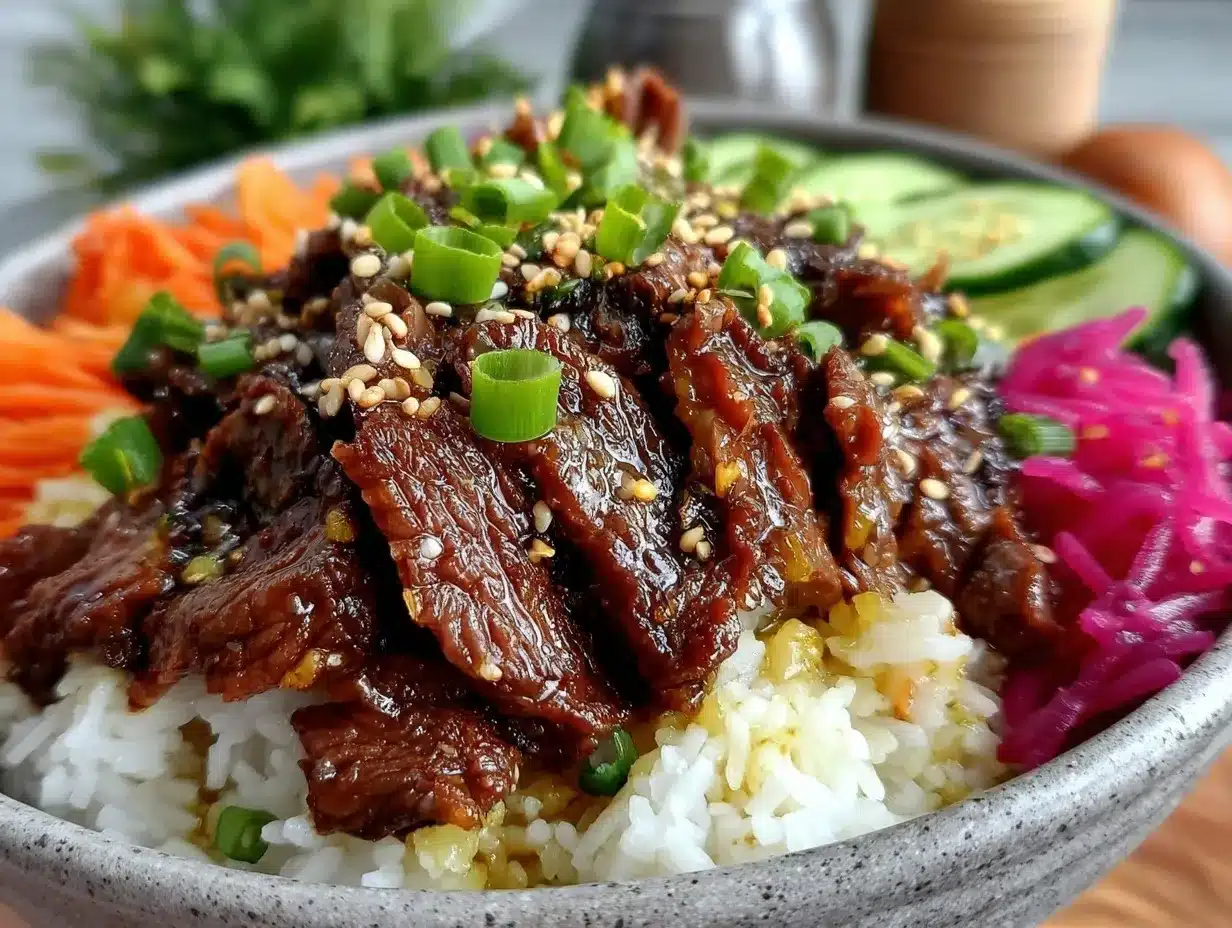
- Prepare the marinade: In a medium bowl, whisk together soy sauce, brown sugar, sesame oil, minced garlic, grated ginger, sliced green onions, rice wine (if using), and black pepper. Stir until the sugar dissolves fully. This should take about 3 minutes.
- Marinate the beef: Add the thinly sliced beef to the marinade, making sure every piece is coated. Cover and refrigerate for at least 15 minutes, ideally 30 for more flavor. (If short on time, even 15 minutes works fine.)
- Make the quick pickled vegetables: In a separate bowl, combine rice vinegar, sugar, salt, and red pepper flakes (if using). Stir to dissolve sugar and salt. Add the carrots, cucumber, and radishes, tossing to coat evenly. Let sit at room temperature for 10–15 minutes while you cook the beef.
- Cook the rice: If not already done, prepare your rice according to package instructions. For extra flavor, add a pinch of salt or a splash of rice vinegar after cooking. Keep warm.
- Cook the beef: Heat a large skillet or cast-iron pan over medium-high heat until shimmering hot. Add the marinated beef in a single layer (you may need to do this in batches to avoid overcrowding). Sear the beef for about 2 minutes per side until nicely browned and cooked through but still tender. It should smell sweet and savory, almost sticky with that caramelized glaze.
- Assemble the bowl: Spoon the warm rice into bowls. Top generously with the cooked bulgogi beef. Drain the pickled vegetables slightly (to avoid sogginess) and add them alongside. Garnish with toasted sesame seeds and extra green onions if desired. Optionally, add a soft-boiled egg or sliced avocado for creaminess.
One trick I’ve learned is to avoid cooking all the beef at once—it steams instead of sears if crowded. Also, let the beef rest a minute off the heat before plating to keep it juicy. The pickles add that necessary brightness to cut through the richness, so don’t skip them!
Cooking Tips & Techniques
Getting the bulgogi just right is all about balance and timing. Here are some tips from my repeated kitchen trials:
- Thin slicing matters: If your beef slices are too thick, the marinade won’t penetrate well, and cooking will take longer, risking toughness. Freezing the beef for about 30 minutes before slicing helps a lot.
- Marinate time: While longer marinating enhances flavor, even a quick 15-minute soak works wonders. I’ve sometimes marinated bulgogi for 2 hours ahead when planning meals.
- High heat for sear: Don’t rush the cooking with low heat. You want a quick sear for caramelization and flavor without overcooking.
- Don’t overcrowd the pan: Cook in batches if needed to keep that perfect sear. Overcrowding causes steam, making the beef less tender.
- Pickled veggies prep: Keep the veggies crisp by draining well before adding to the bowl. The pickling liquid can be saved for salads or dressings.
- Multitasking: While the beef cooks, use the downtime to prepare rice or soft-boil eggs. This efficient juggling speeds up the whole process.
Once, I over-marinated the beef overnight, and it turned mushy—a reminder that more isn’t always better! Also, avoid using too much sugar in the marinade; it can burn quickly during searing, so stick close to the recipe’s amounts.
Variations & Adaptations
If you want to switch things up or accommodate preferences and dietary needs, here are some ideas that work well:
- Protein swaps: Use thinly sliced chicken breast or thigh for a lighter option, or tofu for a vegetarian version. Press tofu well and marinate it the same way, then pan-fry until crispy.
- Grain alternatives: Swap white rice for quinoa, cauliflower rice, or even soba noodles to mix textures and nutrition.
- Pickled veggie variations: Add thinly sliced bell peppers, daikon radish, or even quick kimchi for different flavor profiles. You can also make a spicy pickled cucumber if you like heat.
- Gluten-free option: Use tamari or coconut aminos instead of soy sauce to keep it gluten-free without losing umami.
- Seasonal twists: In summer, toss in fresh herbs like cilantro or basil for a bright note. In winter, add sautéed mushrooms or steamed spinach to the bowl for warmth.
Personally, I once made a batch with creamy chicken caesar pasta salad on the side, and the contrast made for a fun fusion dinner party. Bulgolgi’s flexibility makes it easy to adapt for whatever mood or occasion you’re in.
Serving & Storage Suggestions
This bulgogi bowl is best enjoyed fresh and warm, with the rice still fluffy and the beef tender. I like to serve it in wide, shallow bowls so the layers are visible and easy to mix.
For sides, steamed or roasted vegetables complement the meal nicely, or a light soup if you want a full Korean-inspired spread. A cold glass of iced green tea balances the savory richness.
If you have leftovers, store the beef and pickled vegetables separately in airtight containers in the refrigerator for up to 3 days. Rice can be kept in the fridge but is best gently reheated with a sprinkle of water to keep it moist.
Reheat the beef quickly in a hot pan or microwave until just warm to avoid drying it out. The pickled veggies are great cold or at room temperature and actually taste better after sitting a bit because the flavors meld.
Nutritional Information & Benefits
A serving of this savory Korean beef bulgogi bowl with pickled vegetables roughly contains:
| Nutrient | Amount |
|---|---|
| Calories | 450-500 kcal |
| Protein | 30-35 g |
| Carbohydrates | 50-55 g |
| Fat | 12-15 g |
| Fiber | 3-5 g |
The beef provides a solid dose of protein and iron, while the pickled vegetables add probiotics and antioxidants, supporting digestion and gut health. The use of garlic and ginger also contributes anti-inflammatory benefits, making this bowl a tasty, balanced meal that feels nourishing. For gluten-free eaters, swapping tamari keeps it friendly without sacrificing flavor.
Conclusion
Making this savory Korean beef bulgogi bowl with pickled vegetables has become one of those meals I rely on when I want something satisfying but not complicated. The way the sweet-savory beef pairs with tangy, crunchy pickles is a small culinary joy that never gets old. Plus, the recipe leaves plenty of room for you to tweak and make it your own, whether adding a runny egg or swapping in your favorite veggies.
Honestly, it’s one of those bowls that makes you feel like you’ve done something special — even if you whipped it up on a whim after a long day. If you try it, I’d love to hear how you customize it or what sides you pair it with. Sharing those moments makes cooking feel less like a chore and more like a connection.
FAQs about Savory Korean Beef Bulgogi Bowl
How thin should the beef be for bulgogi?
Ideally, the beef slices should be about 1/8 inch (3 mm) thick. This allows the marinade to soak in quickly and the meat to cook fast without drying out.
Can I make the pickled vegetables ahead of time?
Yes! You can prepare the pickled vegetables up to a day in advance and keep them refrigerated. The flavors will deepen, but they stay crisp if drained well before serving.
What can I use if I can’t find rice wine or mirin?
If you don’t have rice wine, a splash of dry sherry or a teaspoon of sugar can mimic the sweetness and acidity mirin provides, but it’s okay to omit it if needed.
Is there a vegetarian version of bulgogi?
Absolutely! Firm tofu or thinly sliced mushrooms marinated with the same sauce make a delicious vegetarian bulgogi bowl.
How do I store leftovers to keep them fresh?
Store the beef and pickled vegetables separately in airtight containers in the fridge for up to 3 days. Reheat beef gently to avoid toughness, and enjoy the pickles cold.
Pin This Recipe!
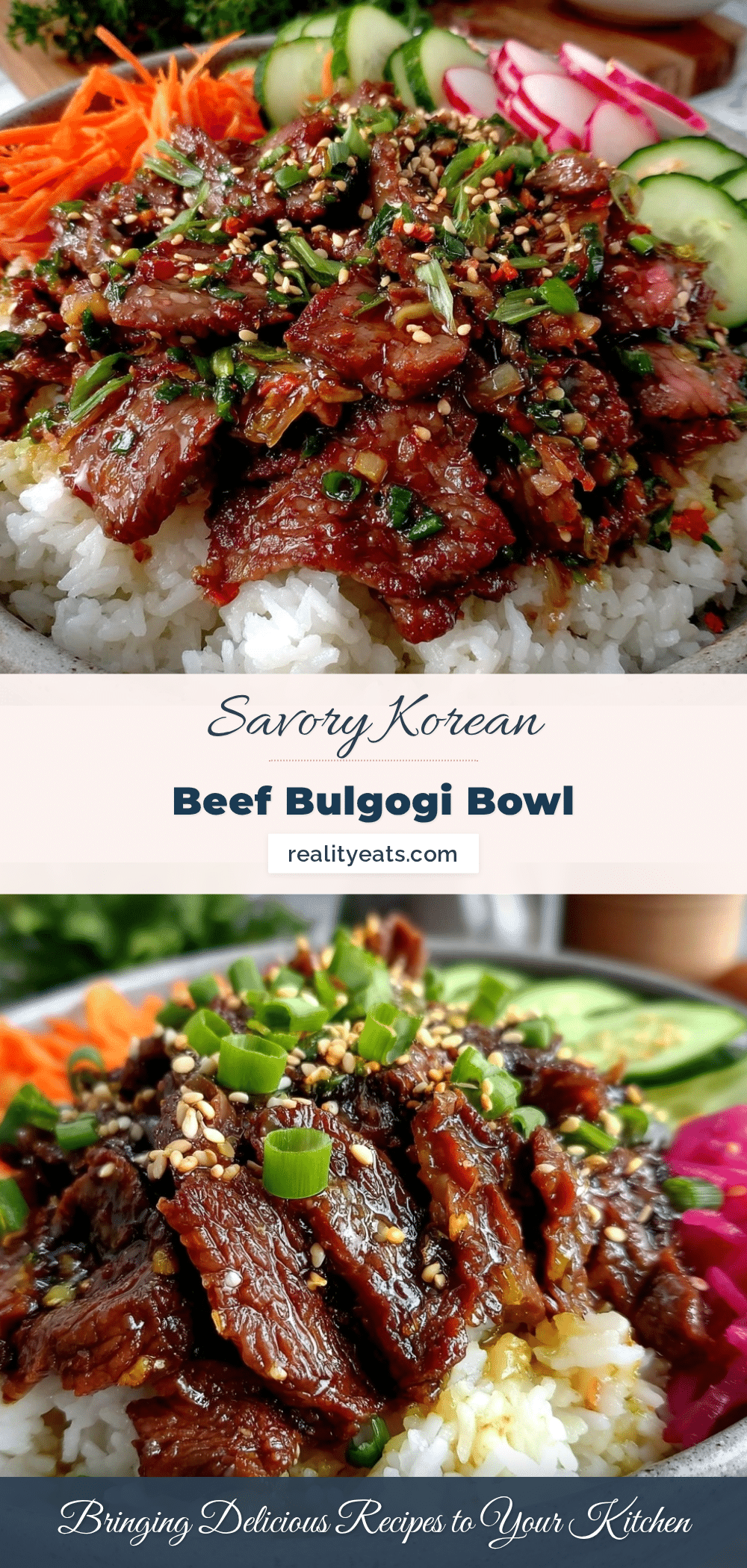
Savory Korean Beef Bulgogi Bowl

A quick and easy Korean beef bulgogi bowl with tangy pickled vegetables, perfect for a flavorful weeknight meal that balances sweet, savory, and fresh flavors.
- Prep Time: 15 minutes
- Cook Time: 15 minutes
- Total Time: 30 minutes
- Yield: 4 servings 1x
- Category: Main Course
- Cuisine: Korean
Ingredients
- 1 lb (450g) thinly sliced beef ribeye or sirloin
- 1/4 cup (60ml) soy sauce
- 2 tbsp brown sugar
- 2 tbsp sesame oil
- 3 cloves garlic, minced
- 1 tsp freshly grated ginger
- 2 green onions, thinly sliced
- 1 tbsp rice wine or mirin (optional)
- 1/2 tsp freshly ground black pepper
- 1 tbsp toasted sesame seeds
- 1 cup julienned carrots
- 1 cup thinly sliced cucumber
- 1/2 cup thinly sliced radishes
- 1/4 cup rice vinegar
- 1 tbsp sugar
- 1/2 tsp salt
- Pinch of red pepper flakes (optional)
- 2 cups cooked white or brown rice
- Optional: soft-boiled eggs or sliced avocado for topping
Instructions
- Prepare the marinade by whisking together soy sauce, brown sugar, sesame oil, minced garlic, grated ginger, sliced green onions, rice wine (if using), and black pepper until sugar dissolves (about 3 minutes).
- Add the thinly sliced beef to the marinade, coat well, cover, and refrigerate for at least 15 minutes (ideally 30 minutes).
- Make the quick pickled vegetables by combining rice vinegar, sugar, salt, and red pepper flakes (if using) in a bowl. Stir to dissolve sugar and salt, then add carrots, cucumber, and radishes. Toss to coat and let sit at room temperature for 10–15 minutes.
- Cook the rice according to package instructions, adding a pinch of salt or splash of rice vinegar for extra flavor. Keep warm.
- Heat a large skillet or cast-iron pan over medium-high heat until hot. Add marinated beef in a single layer (cook in batches if needed) and sear about 2 minutes per side until browned and cooked through but tender.
- Assemble the bowl by spooning warm rice into bowls, topping with cooked bulgogi beef, drained pickled vegetables, and garnishing with toasted sesame seeds and extra green onions. Optionally add soft-boiled egg or sliced avocado.
Notes
Avoid overcrowding the pan to ensure proper searing. Marinate beef at least 15 minutes for flavor, but not too long to prevent mushiness. Drain pickled vegetables well to avoid sogginess. For gluten-free, substitute soy sauce with tamari or coconut aminos. Thinly slice beef about 1/8 inch thick for best results.
Nutrition
- Serving Size: 1 bowl (approximatel
- Calories: 475
- Sugar: 10
- Sodium: 900
- Fat: 13.5
- Saturated Fat: 3.5
- Carbohydrates: 52.5
- Fiber: 4
- Protein: 32.5
Keywords: Korean beef bulgogi, bulgogi bowl, quick Korean recipe, pickled vegetables, easy weeknight dinner, savory beef bowl