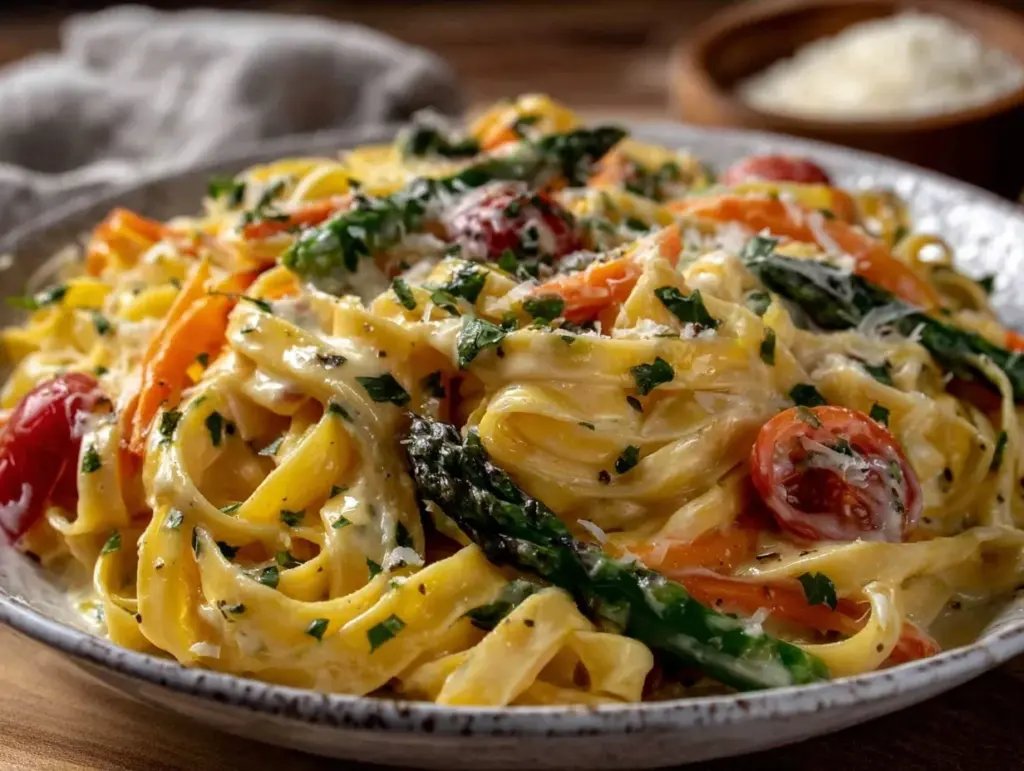
“I swear, if you had peeked into my kitchen last Thursday night, you’d have caught me mid-chaos, juggling a burnt-out bulb and a fridge full of random veggies. Honestly, I wasn’t sure if dinner was going to be a disaster or a miracle. That’s when I threw together this creamy spring pasta primavera with lemon garlic sauce — mostly because I was too tired to do much else. Funny thing is, it turned out so good that I’ve made it no less than three times since then. It’s the kind of dish that sneaks up on you with its bright, fresh flavors but still feels like a warm hug after a long day.
The zingy lemon and garlicky sauce balances perfectly with crisp-tender spring veggies and that luscious creamy coating, making every bite feel light yet indulgent. I remember sitting at the table, fork in hand, realizing this recipe had quietly become my go-to reset meal. No fuss, no complicated steps, just honest-to-goodness flavor wrapped in a bowl. Plus, it’s the kind of thing you can whip up even if you’re cooking solo or feeding a crowd without breaking a sweat. Honestly, this pasta primavera with lemon garlic sauce isn’t just a dish; it’s that little moment of calm you didn’t know you needed—and it’s stuck with me ever since.
Why You’ll Love This Creamy Spring Pasta Primavera with Lemon Garlic Sauce
After testing this recipe multiple times, I can confidently say it nails that balance between fresh and comforting in a way that’s hard to beat. Here’s why it’s become a staple in my kitchen:
- Quick & Easy: Ready in about 30 minutes, it’s perfect for busy weeknights or when you want something satisfying without the wait.
- Simple Ingredients: You probably have most of these pantry staples and seasonal veggies on hand already—no special grocery runs needed.
- Perfect for Spring & Summer: The fresh vegetables highlight the season’s best, making it ideal for lighter meals or casual get-togethers.
- Crowd-Pleaser: Whether you’re serving family or friends, this dish tends to get rave reviews, especially from those who usually shy away from greens.
- Unbelievably Delicious: The creamy lemon garlic sauce is a game-changer, offering a bright, tangy flavor that coats the pasta beautifully without feeling heavy.
This isn’t just another pasta primavera recipe. The secret lies in the sauce — a dreamy blend of garlic, fresh lemon juice, and a touch of cream that makes the veggies shine while wrapping everything in cozy richness. It’s a dish that invites you to savor each bite, whether you’re sitting down for a quiet dinner or hosting an impromptu meal. Plus, if you love easy pasta dishes like the creamy chicken caesar pasta salad, this primavera adds a fresh, veggie-packed twist you’ll appreciate.
What Ingredients You Will Need
This recipe uses simple, wholesome ingredients to deliver bold flavor and a satisfying texture without any fuss. Most are pantry staples or seasonal picks you can easily swap out depending on what you have.
- Pasta: 12 oz (340 g) fettuccine or linguine (I prefer Barilla for its firm texture)
- Vegetables:
- 1 cup (150 g) asparagus tips, trimmed and cut into 2-inch pieces
- 1 cup (130 g) sugar snap peas, trimmed
- 1 cup (130 g) cherry tomatoes, halved
- 1 medium zucchini, sliced into thin half-moons
- 1/2 cup (75 g) thinly sliced bell pepper (any color)
- Sauce:
- 3 cloves garlic, minced (gives that punchy garlic flavor)
- 2 tbsp (30 ml) extra virgin olive oil
- 1 cup (240 ml) heavy cream or half-and-half (for lighter option)
- 1/2 cup (50 g) grated Parmesan cheese (I recommend Parmigiano-Reggiano for richness)
- Juice and zest of 1 large lemon (adds bright freshness)
- Salt and freshly ground black pepper, to taste
- 1/4 tsp red pepper flakes (optional, for a slight kick)
- Finishing Touch:
- Fresh basil leaves, torn (for garnish and herbal aroma)
- Extra Parmesan, for serving
Substitutions: For a dairy-free version, swap cream with canned coconut milk and use nutritional yeast in place of Parmesan. Gluten-free pasta works great here, too—just cook according to package instructions.
Equipment Needed
- Large pot: For boiling pasta. A heavy-bottomed one prevents scorching when you drain and toss everything.
- Large skillet or sauté pan: To cook the vegetables and sauce together. Non-stick or stainless steel works well.
- Colander: For draining pasta. If you don’t have one, a slotted spoon will do in a pinch.
- Microplane or fine grater: For zesting the lemon and grating Parmesan finely.
- Measuring cups and spoons: To keep the seasoning balanced and consistent.
If you’re like me, sometimes you’re missing a piece of equipment. No worries! I’ve tossed this together using a large skillet and a fork for stirring when I didn’t have tongs handy. And if you love one-pot wonders, this recipe almost feels like it, since the sauce and veggies come together quickly in the skillet while the pasta cooks.
Preparation Method
- Boil the pasta: Bring a large pot of salted water to a rolling boil. Add 12 oz (340 g) of fettuccine and cook until al dente, about 9-11 minutes (check package for exact time). Stir occasionally to prevent sticking.
- Prepare the veggies: While pasta cooks, heat 2 tbsp (30 ml) olive oil in a large skillet over medium heat. Add the minced garlic and sauté for 30 seconds until fragrant but not browned.
- Sauté vegetables: Add asparagus, sugar snap peas, zucchini, and bell pepper to the skillet. Cook, stirring occasionally, for about 4-5 minutes until veggies are crisp-tender. Toss in cherry tomatoes and cook an additional 2 minutes. Watch for those tomatoes to soften but not burst completely.
- Make the sauce: Lower heat to medium-low. Pour in 1 cup (240 ml) heavy cream and stir to combine. Let it warm gently for 2-3 minutes, then add the grated Parmesan, lemon juice, and zest. Stir until the cheese melts and the sauce thickens slightly. Season with salt, black pepper, and red pepper flakes if using.
- Combine pasta and sauce: Drain the pasta, reserving about 1/2 cup (120 ml) of pasta water. Toss the pasta into the skillet with the sauce and veggies. If the sauce feels too thick, add a splash of reserved pasta water to loosen it. Stir well to coat evenly.
- Final touches: Remove from heat and stir in torn fresh basil leaves. Taste and adjust seasoning as needed—sometimes a pinch more salt or a squeeze of lemon juice brightens it up perfectly.
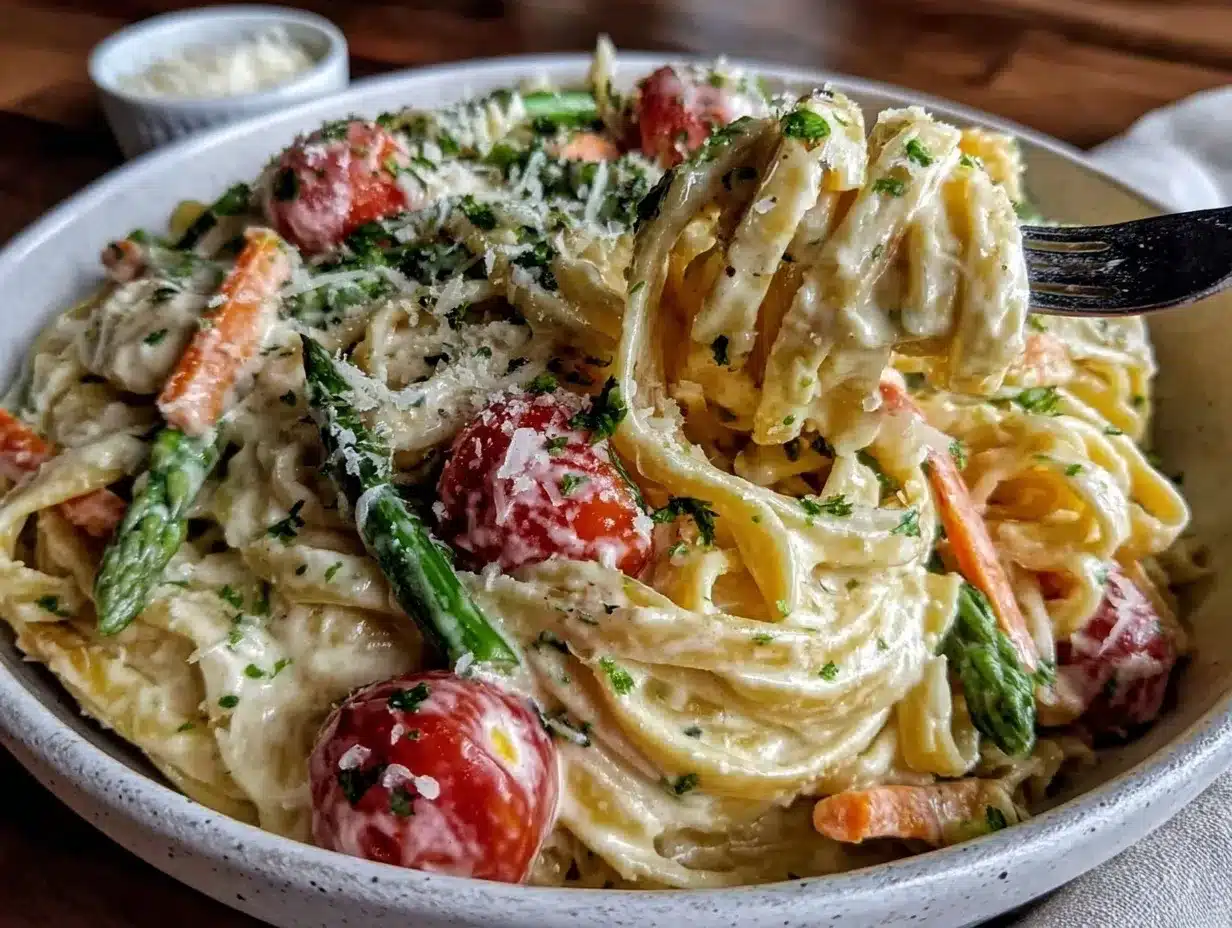
- Serve immediately: Plate the pasta primavera and sprinkle with extra Parmesan. Enjoy the contrast of creamy sauce with fresh, vibrant veggies and that hint of garlic-lemon zing!
Tip: If the sauce starts to thicken too much while resting, a quick splash of pasta water and a gentle stir bring it right back. Also, don’t overcook the veggies—they should have a little snap to balance the creaminess.
Cooking Tips & Techniques
One trick I’ve learned from experience is to add the veggies in stages based on their cooking times. Asparagus and snap peas take longer, so they go in first, while cherry tomatoes finish things off with their juicy pop. It keeps the texture lively rather than mushy.
Garlic is the backbone here, but watch it closely—it burns fast and turns bitter. I like to keep the heat medium and stir constantly during that initial sauté. Also, using freshly grated Parmesan makes a noticeable difference in creaminess and flavor compared to pre-grated cheese.
For a silky sauce, resist the urge to boil the cream. Just warm it gently and let the cheese melt slowly. If you’re multitasking, try prepping the veggies while the pasta water heats up to save time. And don’t toss the pasta water! That starchy liquid is gold for adjusting sauce consistency.
Finally, fresh lemon zest and juice added at the end brighten the whole dish—don’t skip them, even if you’re in a hurry. They cut through the richness and make this primavera feel truly spring-like.
Variations & Adaptations
This creamy spring pasta primavera is a base that welcomes plenty of personal tweaks:
- Protein boost: Add grilled chicken strips, sautéed shrimp, or crispy tofu cubes for a heartier meal. I once tossed in leftover crispy ham and cheese sticks bites for a fun twist on leftovers.
- Seasonal swaps: In summer, swap snap peas and asparagus for fresh green beans or summer squash. Frozen peas work in a pinch during off-season.
- Dairy-free version: Use coconut cream and nutritional yeast instead of heavy cream and Parmesan. The lemon garlic flavor still shines.
- Spice it up: Add more red pepper flakes or a dash of smoked paprika for a smoky heat.
- Different pasta: Penne, farfalle, or gluten-free pasta all work beautifully if you want to change things up.
Personally, I once added a handful of chopped fresh mint to the final toss, which gave it a refreshing lift that surprised me. It’s those little experiments that keep this recipe interesting and approachable.
Serving & Storage Suggestions
This pasta primavera is best served hot or warm, straight from the pan to plate. The lemon garlic sauce tends to thicken as it cools, so a quick reheat with a splash of water or broth brings back that creamy texture nicely.
Pair it with a crisp green salad or crusty bread to soak up any extra sauce. For a light meal, a simple side like the fresh southwest chipotle salad complements the flavors beautifully without overpowering.
Leftovers keep well in an airtight container in the fridge for up to 3 days. When reheating, stir in a little olive oil or broth to loosen the sauce. Freezing is possible, but the texture of fresh veggies may change slightly, so I recommend enjoying it fresh when possible.
Interestingly, the flavors meld a bit overnight—sometimes the lemon brightens even more the next day, making it a pleasantly surprising lunch option.
Nutritional Information & Benefits
One serving of this creamy spring pasta primavera (about one-sixth of the recipe) provides approximately:
| Calories | 410 kcal |
|---|---|
| Protein | 14 g |
| Carbohydrates | 50 g |
| Fat | 14 g |
| Fiber | 5 g |
With fresh vegetables like asparagus and snap peas, you’re getting a good dose of fiber, vitamins A and C, plus antioxidants. The lemon juice adds vitamin C and a nice digestive boost, while the garlic offers well-known anti-inflammatory benefits.
This dish is vegetarian-friendly and can be adapted to gluten-free or dairy-free diets with simple swaps. Just be mindful of Parmesan cheese if you’re sensitive to dairy. For me, it’s a satisfying way to enjoy spring’s bounty without feeling weighed down, perfect for anyone balancing taste and wellness.
Conclusion
This creamy spring pasta primavera with lemon garlic sauce has quietly become one of my favorite ways to welcome the season’s fresh produce into a comforting, satisfying meal. It’s approachable, flexible, and honestly, a little bit addictive. Whether you’re cooking for one or feeding a small crowd, it’s a recipe that invites you to tweak and make it your own.
I love how the bright lemon and garlic cut through the creaminess, making each bite fresh but still indulgent. It’s the kind of dish that feels thoughtful but never complicated—just good food that makes you feel good. If you try it, I’d love to hear how you make it yours!
And if you want a delicious way to round out your meal, pairing this primavera with a crisp salad like the classic creamy church salad always hits the spot.
Frequently Asked Questions
Can I use other types of pasta for this recipe?
Absolutely! Fettuccine or linguine is ideal, but penne, farfalle, or gluten-free pasta all work well. Just adjust cooking times as needed.
Is this recipe suitable for vegans?
Not as written, but you can make it vegan by substituting the cream with coconut cream and Parmesan with nutritional yeast or a vegan cheese alternative.
How do I keep the vegetables crisp and not soggy?
Cook veggies over medium heat and add them in stages based on their cook times. Avoid overcooking—aim for tender-crisp texture.
Can I prepare this dish ahead of time?
You can prep the veggies and lemon garlic sauce in advance, but it’s best to combine everything just before serving for the freshest taste and texture.
What’s the best way to reheat leftovers?
Warm gently in a skillet or microwave with a splash of water or broth to loosen the sauce and prevent drying out.
Pin This Recipe!
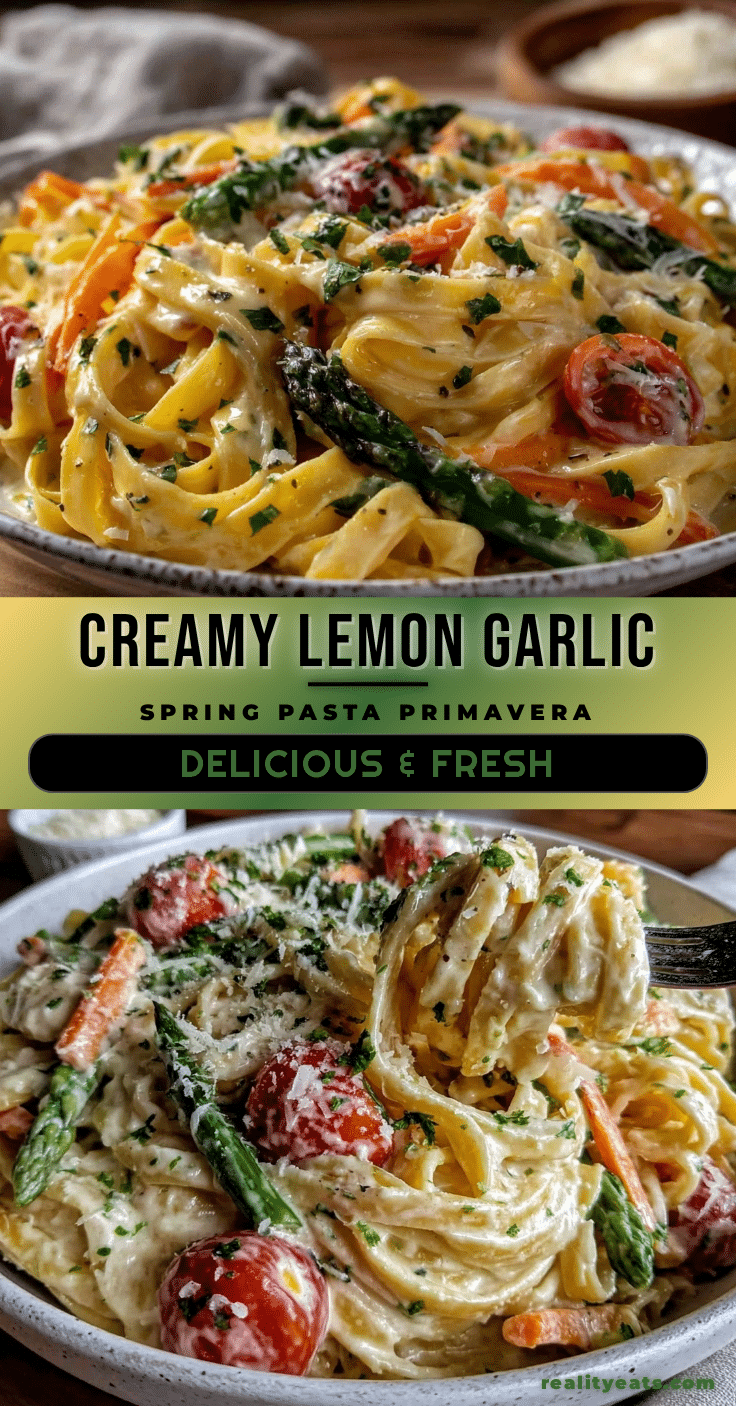
Creamy Spring Pasta Primavera with Lemon Garlic Sauce
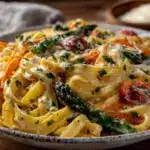
A quick and easy pasta primavera featuring crisp-tender spring vegetables coated in a luscious creamy lemon garlic sauce, perfect for a light yet indulgent meal.
- Prep Time: 10 minutes
- Cook Time: 20 minutes
- Total Time: 30 minutes
- Yield: 6 servings 1x
- Category: Main Course
- Cuisine: Italian
Ingredients
- 12 oz fettuccine or linguine
- 1 cup asparagus tips, trimmed and cut into 2-inch pieces
- 1 cup sugar snap peas, trimmed
- 1 cup cherry tomatoes, halved
- 1 medium zucchini, sliced into thin half-moons
- 1/2 cup thinly sliced bell pepper (any color)
- 3 cloves garlic, minced
- 2 tbsp extra virgin olive oil
- 1 cup heavy cream or half-and-half
- 1/2 cup grated Parmesan cheese
- Juice and zest of 1 large lemon
- Salt and freshly ground black pepper, to taste
- 1/4 tsp red pepper flakes (optional)
- Fresh basil leaves, torn (for garnish)
- Extra Parmesan, for serving
Instructions
- Bring a large pot of salted water to a rolling boil. Add 12 oz of fettuccine and cook until al dente, about 9-11 minutes. Stir occasionally to prevent sticking.
- While pasta cooks, heat 2 tbsp olive oil in a large skillet over medium heat. Add minced garlic and sauté for 30 seconds until fragrant but not browned.
- Add asparagus, sugar snap peas, zucchini, and bell pepper to the skillet. Cook, stirring occasionally, for about 4-5 minutes until veggies are crisp-tender. Toss in cherry tomatoes and cook an additional 2 minutes until softened but not bursting.
- Lower heat to medium-low. Pour in 1 cup heavy cream and stir to combine. Warm gently for 2-3 minutes, then add grated Parmesan, lemon juice, and zest. Stir until cheese melts and sauce thickens slightly. Season with salt, black pepper, and red pepper flakes if using.
- Drain pasta, reserving about 1/2 cup of pasta water. Toss pasta into the skillet with sauce and veggies. Add reserved pasta water if sauce is too thick. Stir well to coat evenly.
- Remove from heat and stir in torn fresh basil leaves. Taste and adjust seasoning as needed.
- Serve immediately, plating the pasta primavera and sprinkling with extra Parmesan.
Notes
If the sauce thickens too much while resting, add a splash of pasta water and stir gently to loosen. Avoid overcooking vegetables to maintain a crisp-tender texture. Freshly grated Parmesan enhances creaminess and flavor. For dairy-free, substitute cream with coconut milk and Parmesan with nutritional yeast. Gluten-free pasta can be used as a substitute.
Nutrition
- Serving Size: About one-sixth of t
- Calories: 410
- Fat: 14
- Carbohydrates: 50
- Fiber: 5
- Protein: 14
Keywords: pasta primavera, lemon garlic sauce, spring pasta, creamy pasta, vegetarian pasta, easy dinner, quick pasta recipe