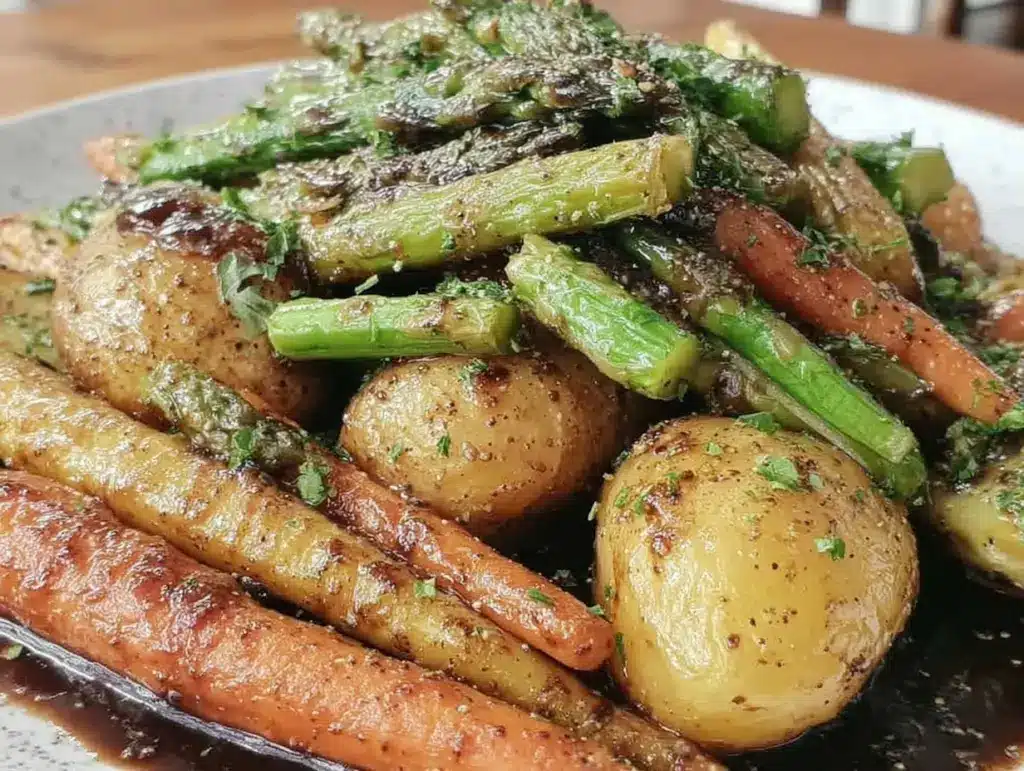
The smell of caramelized carrots, tender asparagus, and sweet cherry tomatoes roasting in the oven with a tangy balsamic glaze—honestly, it’s one of those aromas that makes your kitchen feel like a cozy spring market. I first stumbled upon this roasted spring vegetables with balsamic glaze recipe during a weekend when I wanted something quick but full of flavor. You know how sometimes you just want something healthy yet totally satisfying? This recipe nails that balance every single time.
Over several tries, tweaking the glaze and roasting times, I landed on this version that’s both straightforward and downright irresistible. The balsamic reduction adds a touch of sweetness and acidity that wakes up the natural flavors of the veggies. Plus, it’s perfect for anyone who wants a colorful, nutrient-packed dish that’s ready in under an hour. Whether you’re feeding a hungry family or just craving a simple, vibrant side, roasted spring vegetables with balsamic glaze have become my go-to for easy, wholesome meals.
As someone who loves cooking seasonal dishes, I can vouch for how fresh spring veggies come alive with this method. It’s a recipe I’ve shared with friends and even recommended to clients looking for healthy dinner ideas. Trust me, once you try this, you’ll find yourself making it again and again.
Why You’ll Love This Recipe
After roasting spring vegetables with balsamic glaze multiple times, I can say it’s a total winner. Here’s why this recipe has a special place in my kitchen:
- Quick & Easy: From prep to plating, it takes about 45 minutes—perfect for busy weeknights or when you want something fuss-free.
- Simple Ingredients: No need for fancy stuff—just fresh seasonal veggies, balsamic vinegar, olive oil, and a few pantry staples.
- Perfect for Spring: This recipe celebrates the season’s best produce, making it ideal for brunches, potlucks, or light dinners.
- Crowd-Pleaser: I’ve served this to a mix of picky eaters and veggie lovers alike, and it always gets rave reviews.
- Unbelievably Delicious: The natural sweetness and slight char on the veggies combined with the tangy glaze create a mouthwatering combo.
What makes this recipe stand out, honestly, is the glaze technique. Reducing balsamic vinegar until it thickens brings out a deep, rich flavor that complements the roasted vegetables perfectly. It’s not just roasted veggies; it’s roasted veggies with a sweet-savory punch. Plus, the way the veggies caramelize in the oven adds a texture contrast that’s just delightful.
This dish isn’t just food—it’s comfort and freshness in one. I love making it when I want something healthy but still crave that satisfying, cozy feeling food gives. If you’re after a recipe that feels special without hours in the kitchen, this roasted spring vegetables with balsamic glaze recipe is definitely for you.
What Ingredients You Will Need
This recipe uses simple, wholesome ingredients to deliver bold flavor and satisfying texture without the fuss. You likely have most of these in your kitchen, and the fresh veggies can be swapped easily depending on what’s in season.
- Asparagus: 1 bunch, trimmed (look for firm, bright green stalks)
- Carrots: 4 medium, peeled and cut into sticks (I like using rainbow carrots when available)
- Radishes: 1 cup, halved (adds a nice peppery bite)
- Cherry tomatoes: 1 cup, whole (choose ripe, juicy ones for sweetness)
- Red onion: 1 small, cut into wedges (adds subtle sweetness when roasted)
- Olive oil: 3 tablespoons (extra virgin for best flavor)
- Balsamic vinegar: ¼ cup (I recommend Colavita or any good quality aged balsamic for richness)
- Honey or maple syrup: 1 tablespoon (balances the acidity)
- Garlic: 2 cloves, minced (adds savory depth)
- Fresh thyme or rosemary: 1 tablespoon chopped (optional, for an herby note)
- Salt and freshly ground black pepper: to taste
If you want to swap anything, feel free! For example, use zucchini or snap peas instead of radishes or add baby potatoes for extra heartiness. For a vegan option, maple syrup works perfectly instead of honey.
Equipment Needed
- Baking sheet: A rimmed sheet pan works best to catch any drips and allow even roasting.
- Mixing bowls: At least one large bowl for tossing veggies with oil and seasonings.
- Small saucepan: To reduce the balsamic glaze (a non-stick pan is ideal to avoid burning).
- Measuring cups and spoons: For precise ingredient amounts.
- Sharp knife and cutting board: For prepping vegetables safely and efficiently.
If you don’t have a rimmed baking sheet, a cast iron skillet or casserole dish works too—just keep an eye on the veggies to avoid steaming instead of roasting. Personally, I love using a sheet pan lined with parchment paper for easier cleanup. Also, a silicone spatula helps with scraping down the glaze pan at the end without scratching.
Detailed Preparation Method
- Preheat your oven to 425°F (220°C). This higher heat encourages caramelization and roasting without overcooking. Give the oven a few minutes to reach full temperature.
- Prepare the vegetables: Trim the asparagus ends, peel and cut the carrots into 2-inch sticks, halve the radishes, cut the red onion into wedges, and keep cherry tomatoes whole. Make sure the pieces are roughly uniform for even cooking.
- In a large mixing bowl, combine the veggies with olive oil, minced garlic, salt, and pepper. Toss thoroughly so each piece is coated. If using fresh herbs, add them here but save some for garnish later.
- Spread the vegetables evenly on your baking sheet in a single layer. Avoid overcrowding—if needed, use two pans or roast in batches. This helps them roast instead of steam.
- Place the baking sheet in the oven and roast for 20-25 minutes. Halfway through, give the veggies a gentle toss or flip to ensure even browning. You’ll notice the edges turning golden and the aroma starting to fill your kitchen.
- While the veggies roast, prepare the balsamic glaze: In a small saucepan, combine the balsamic vinegar and honey (or maple syrup). Bring to a simmer over medium heat and let it reduce, stirring occasionally, until it thickens and coats the back of a spoon. This usually takes about 8-10 minutes. Watch carefully to avoid burning.
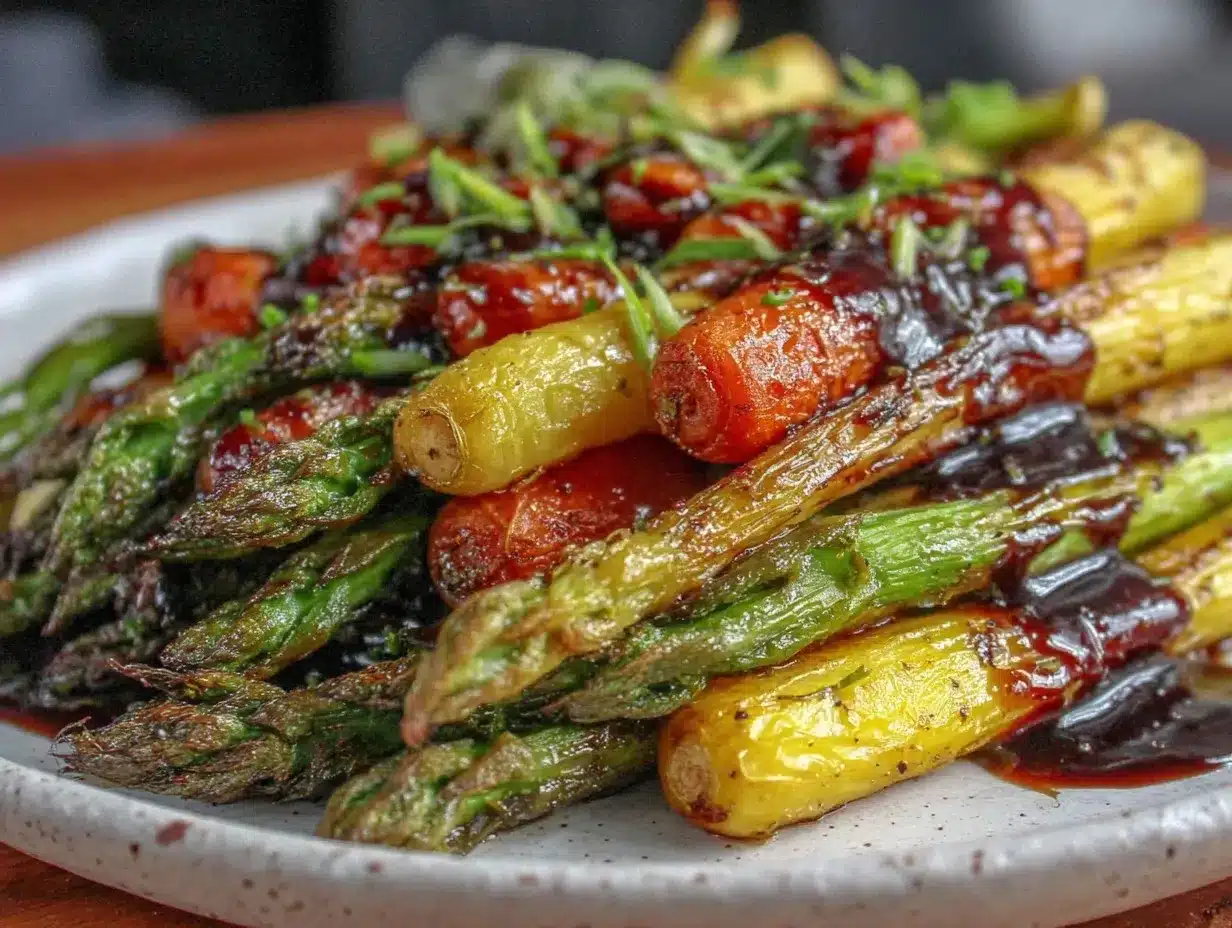
- Once the vegetables are tender and slightly caramelized, remove them from the oven. Drizzle the balsamic glaze over the roasted veggies while they’re still warm. Toss gently to coat evenly, but don’t overmix—you want to keep some of that roasted texture.
- Transfer to a serving dish and garnish with any remaining fresh herbs. Serve immediately for the best flavor and texture!
Pro tip: If your glaze thickens too much, stir in a teaspoon of warm water to loosen it before drizzling. Also, if your veggies start to brown too quickly, tent foil over them halfway through roasting to prevent burning.
Cooking Tips & Techniques
Roasting spring vegetables with balsamic glaze is simple, but a few tricks from experience make a big difference. First off, don’t skimp on the oven temperature—425°F (220°C) is ideal to get that perfect crispy edge without drying out the veggies. Lower temps tend to steam instead, which kills the texture.
Use a rimmed baking sheet rather than a flat one. It allows air to circulate and prevents juice from pooling, which can make the veggies soggy. Tossing the veggies halfway through roasting is key too; it promotes even browning and stops one side from getting too dark.
When making the balsamic glaze, patience is your friend. Let it reduce slowly on medium heat—too high and it burns easily. You want a syrupy consistency, not thick like molasses. If it gets too thick, a splash of warm water fixes it right up.
Lastly, season well but taste as you go. Roasted veggies can handle a good pinch of salt and pepper, but don’t overdo it. The glaze brings acidity and sweetness, so balance is everything. I’ve learned these little details after a few burned glazes and bland batches—it’s all part of the fun!
Variations & Adaptations
This roasted spring vegetables with balsamic glaze recipe is super versatile—you can tweak it easily to suit your mood or dietary needs.
- Seasonal swap: In summer, swap asparagus for zucchini or add sweet corn kernels. In fall, try roasted Brussels sprouts and butternut squash with the same glaze.
- Protein boost: Add chickpeas or tofu cubes tossed with the veggies before roasting for a heartier dish.
- Spice it up: Sprinkle red pepper flakes or smoked paprika into the olive oil mix for a flavor kick.
- Allergen-friendly: This recipe is naturally gluten-free and dairy-free. For a nutty twist, add toasted pine nuts or slivered almonds just before serving (if no nut allergies).
One personal favorite variation is tossing in some baby potatoes with rosemary and garlic—roasted perfectly alongside the other veggies. It turns the dish into a fuller meal but keeps the same irresistible glaze flavor. Don’t be shy about experimenting—the glaze works magic on almost any veggie combo!
Serving & Storage Suggestions
Serve these roasted spring vegetables warm or at room temperature. They make a fantastic side for grilled chicken, fish, or even a simple grain bowl. I like to plate them with a sprinkle of fresh parsley or basil for extra color and freshness.
If you have leftovers, store them in an airtight container in the fridge for up to 3 days. The flavors actually deepen overnight, so sometimes they taste even better the next day! To reheat, gently warm in a skillet over medium heat or in the oven at 350°F (175°C) to keep the veggies from getting mushy.
Pair this dish with a crisp white wine or a light herbal tea for a refreshing meal. The balsamic glaze’s tang cuts through richness nicely, making it a balanced, satisfying plate anytime.
Nutritional Information & Benefits
This roasted spring vegetables with balsamic glaze recipe is packed with vitamins, fiber, and antioxidants thanks to the variety of fresh produce. Asparagus and radishes provide vitamin C and K, while carrots add beta-carotene for eye health. The cherry tomatoes deliver lycopene, known for its anti-inflammatory properties.
Olive oil brings heart-healthy fats, and balsamic vinegar has been shown to help regulate blood sugar levels. The moderate use of honey or maple syrup keeps the glaze naturally sweet without excess sugar.
Overall, this dish suits gluten-free, vegan (if honey is swapped), and low-calorie diets perfectly. It’s a delicious way to boost veggie intake without feeling like you’re sacrificing flavor or satisfaction.
Conclusion
Roasted spring vegetables with balsamic glaze is that kind of recipe you’ll find yourself returning to, season after season. It’s easy to make, packed with flavor, and offers a vibrant way to enjoy fresh produce. What I love most is how the glaze transforms simple veggies into something truly special—comfort food with a fresh twist.
Feel free to customize this recipe with your favorite spring veggies or add a personal touch with herbs and spices. I’d love to hear how you make it your own, so please drop a comment below or share your variations!
Give this recipe a try—you might just find your next favorite side dish or light meal. Happy roasting!
FAQs
Can I use frozen vegetables for this recipe?
Frozen veggies tend to release more water and might steam rather than roast. If using frozen, thaw and pat dry thoroughly before roasting to get the best texture.
How long does the balsamic glaze keep?
You can store leftover glaze in an airtight container in the fridge for up to 2 weeks. Warm gently before using if it thickens too much.
Can I make this recipe ahead of time?
Yes! Roast the veggies and prepare the glaze separately. Toss them together just before serving or reheat gently to keep the texture intact.
What if I don’t have balsamic vinegar?
Sherry vinegar or red wine vinegar mixed with a little honey can work in a pinch, though the flavor will be less sweet and rich.
Is this recipe suitable for meal prep?
Absolutely. It reheats well and can be portioned into lunches or dinners. Just keep the glaze separate until ready to eat for best freshness.
Pin This Recipe!
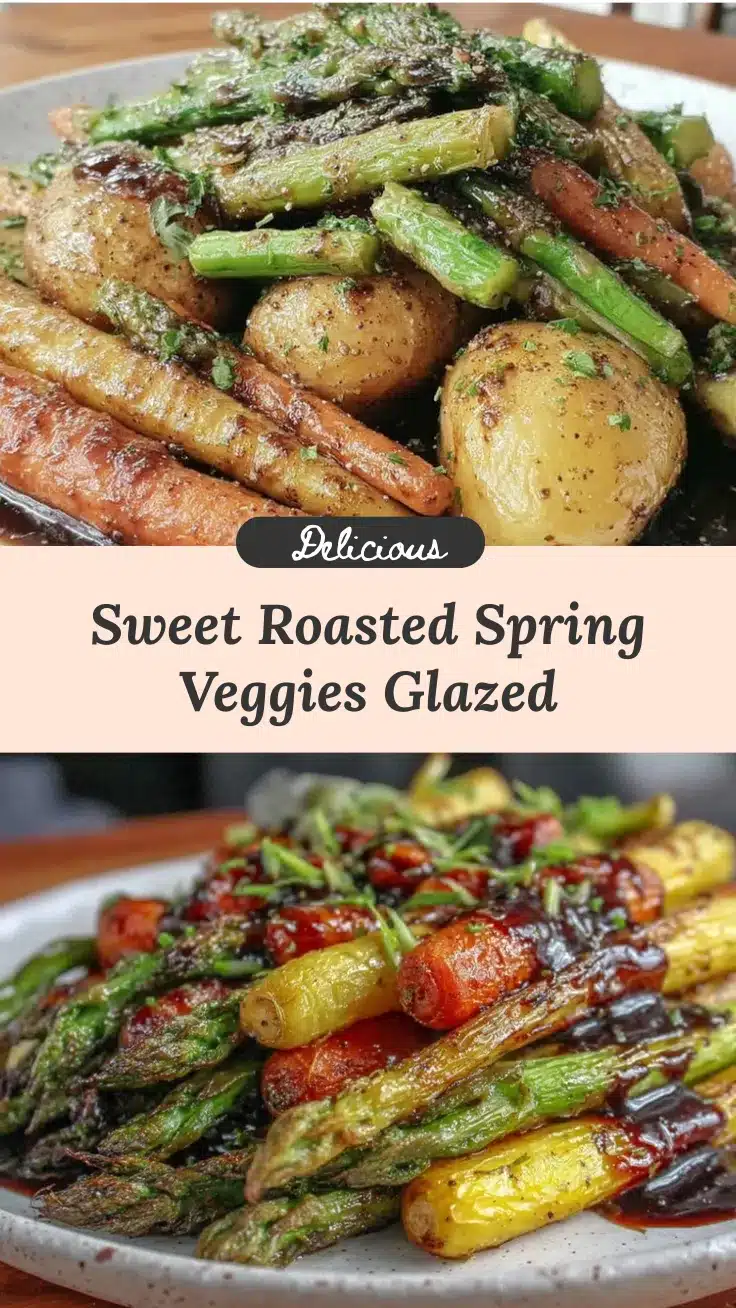
Irresistible Roasted Spring Vegetables with Balsamic Glaze

A quick and easy recipe featuring caramelized spring vegetables roasted to perfection and drizzled with a tangy, sweet balsamic glaze. Perfect for a healthy, colorful side dish or light meal.
- Prep Time: 15 minutes
- Cook Time: 30 minutes
- Total Time: 45 minutes
- Yield: 4 servings 1x
- Category: Side Dish
- Cuisine: American
Ingredients
- 1 bunch asparagus, trimmed
- 4 medium carrots, peeled and cut into 2-inch sticks
- 1 cup radishes, halved
- 1 cup cherry tomatoes, whole
- 1 small red onion, cut into wedges
- 3 tablespoons extra virgin olive oil
- 1/4 cup balsamic vinegar
- 1 tablespoon honey or maple syrup
- 2 cloves garlic, minced
- 1 tablespoon fresh thyme or rosemary, chopped (optional)
- Salt and freshly ground black pepper, to taste
Instructions
- Preheat your oven to 425°F (220°C).
- Prepare the vegetables: trim asparagus ends, peel and cut carrots into 2-inch sticks, halve radishes, cut red onion into wedges, and keep cherry tomatoes whole. Ensure pieces are roughly uniform.
- In a large mixing bowl, combine the veggies with olive oil, minced garlic, salt, and pepper. Toss thoroughly to coat. Add fresh herbs if using, saving some for garnish.
- Spread the vegetables evenly on a rimmed baking sheet in a single layer. Avoid overcrowding; use two pans or roast in batches if needed.
- Roast in the oven for 20-25 minutes, tossing or flipping halfway through for even browning.
- While veggies roast, prepare the balsamic glaze: in a small saucepan, combine balsamic vinegar and honey or maple syrup. Simmer over medium heat, stirring occasionally, until thickened and syrupy (about 8-10 minutes). Watch carefully to avoid burning.
- Remove vegetables from oven once tender and caramelized. Drizzle balsamic glaze over warm veggies and toss gently to coat evenly without overmixing.
- Transfer to a serving dish, garnish with remaining fresh herbs, and serve immediately.
Notes
If glaze thickens too much, stir in a teaspoon of warm water to loosen before drizzling. Tent foil over veggies halfway through roasting if they brown too quickly. Use a rimmed baking sheet to prevent sogginess. For vegan option, substitute honey with maple syrup. Frozen vegetables should be thawed and patted dry before roasting.
Nutrition
- Serving Size: 1 cup of roasted veg
- Calories: 140
- Sugar: 10
- Sodium: 150
- Fat: 7
- Saturated Fat: 1
- Carbohydrates: 18
- Fiber: 4
- Protein: 3
Keywords: roasted vegetables, balsamic glaze, spring vegetables, healthy side dish, easy recipe, vegan, gluten-free