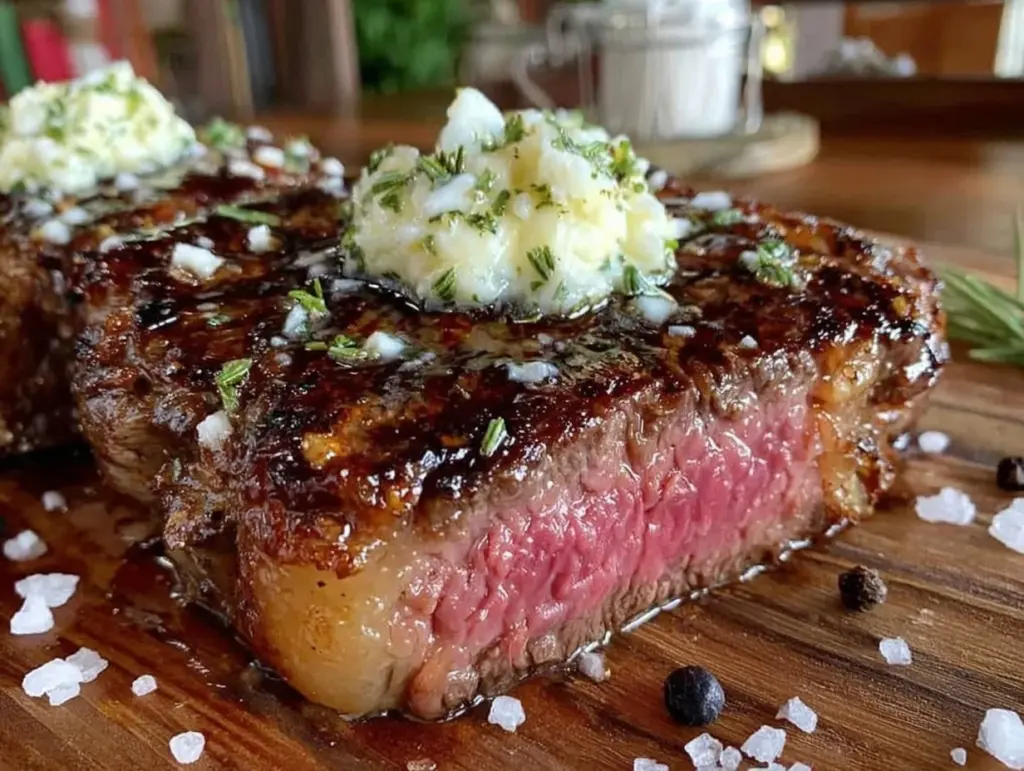
“You sure you want to do it this way?” my friend asked, eyeing the thick ribeye on the counter with a skeptical grin. It was a late Saturday afternoon, and I was determined to try the reverse sear method for the first time. Honestly, I had been skeptical myself—why cook a steak low and slow first, then sear? It sounded backward. But after burning a few steaks in my early grilling days, I was willing to try anything to get that perfect crust without turning the inside into charcoal.
As the oven warmed and the steak slowly came to temperature, the kitchen filled with the faint smell of dry-aged beef, promising something special. When it finally hit the hot cast iron skillet, the sizzling sound was like music. That golden crust developed in minutes, sealing in juices that made every bite melt. And then came the garlic herb butter, melting luxuriously over the steak, sending the aroma into overdrive. It was a quiet evening, just me and the steak, but that moment felt like a small victory.
This perfect reverse sear ribeye steak with garlic herb butter stuck with me because it’s not just a recipe—it’s a simple technique that turns an ordinary steak night into something memorable. No smoke alarms, no guesswork, just reliable, restaurant-quality flavor you can trust. Honestly, it’s the kind of recipe that makes you want to slow down, savor the process, and enjoy the payoff with every juicy bite.
Why You’ll Love This Recipe
After making this perfect reverse sear ribeye steak with garlic herb butter more times than I can count, I can say this method truly transforms how you cook steak at home. Here’s why it’s become a go-to in my kitchen:
- Quick & Easy: The reverse sear process takes about 45 minutes total, but most of that is hands-off, so it’s perfect for busy weeknights or laid-back weekends.
- Simple Ingredients: No fancy marinades or exotic spices—just quality ribeye, butter, garlic, and fresh herbs you probably already have on hand.
- Perfect for Special Occasions: Whether it’s a date night or a holiday dinner, this steak always impresses without stress.
- Crowd-Pleaser: Even my picky-eater brother asks for this recipe every time I make it.
- Unbelievably Delicious: The combination of a tender, evenly cooked interior with a crisp, caramelized crust and the richness of garlic herb butter is next-level comfort food.
What sets this ribeye apart from the usual pan-seared or grilled versions is the slow, gentle cooking before the sear. That means you get a consistent medium-rare edge to edge, not just a rare center surrounded by overcooked meat. Plus, the garlic herb butter isn’t just tossed on at the end—it’s a finishing touch that seeps into every bite, thanks to the steak resting under its warm glow. Honestly, this isn’t just steak—it’s a little celebration on a plate.
What Ingredients You Will Need
This recipe uses simple, wholesome ingredients to deliver bold flavor and satisfying texture without the fuss. Most of these are pantry staples, so no last-minute grocery runs.
- Ribeye steak: 1 thick-cut, bone-in or boneless ribeye (about 1.5 to 2 inches thick, roughly 12-16 oz / 340-450 g). I prefer USDA Choice or Prime grade for the best marbling and flavor.
- Salt: Coarse kosher salt works best for seasoning, helping to draw out moisture and create a nice crust.
- Freshly ground black pepper: Adds a sharp bite that balances the richness.
- Unsalted butter: 3 tablespoons, softened. I like KerryGold for its creamy texture and rich flavor.
- Fresh garlic: 2 cloves, minced. Fresh is key here—powder just won’t do the same job.
- Fresh herbs: 1 tablespoon each of finely chopped rosemary and thyme. These add a fragrant earthiness that pairs perfectly with beef.
- Olive oil: 1 tablespoon, for searing. Use a high smoke point variety like avocado or light olive oil.
Substitution tips: If you want a dairy-free version, swap the butter for a plant-based spread or ghee. For herbs, feel free to try sage or oregano if rosemary isn’t your thing. And if ribeye isn’t available, a thick New York strip can work, though the fat content will differ.
Equipment Needed
- Oven-safe wire rack and baking sheet: Essential for the slow, even cooking stage. The wire rack lets air circulate around the steak so it cooks uniformly.
- Cast iron skillet: Perfect for the final sear because it retains and distributes heat evenly. A well-seasoned pan will give that coveted crust.
- Instant-read meat thermometer: This is a game-changer. It takes all the guesswork out of doneness and helps you nail that perfect medium-rare.
- Tongs: For flipping the steak gently without piercing the meat.
- Small mixing bowl: To combine the garlic herb butter.
If you don’t have a cast iron skillet, a heavy stainless steel pan will do, just make sure it’s preheated well. For budget-friendly options, many stores carry affordable wire racks and baking sheets that work just fine. Keeping your thermometer calibrated is a tip I learned the hard way—check it regularly against boiling water to stay accurate.
Preparation Method
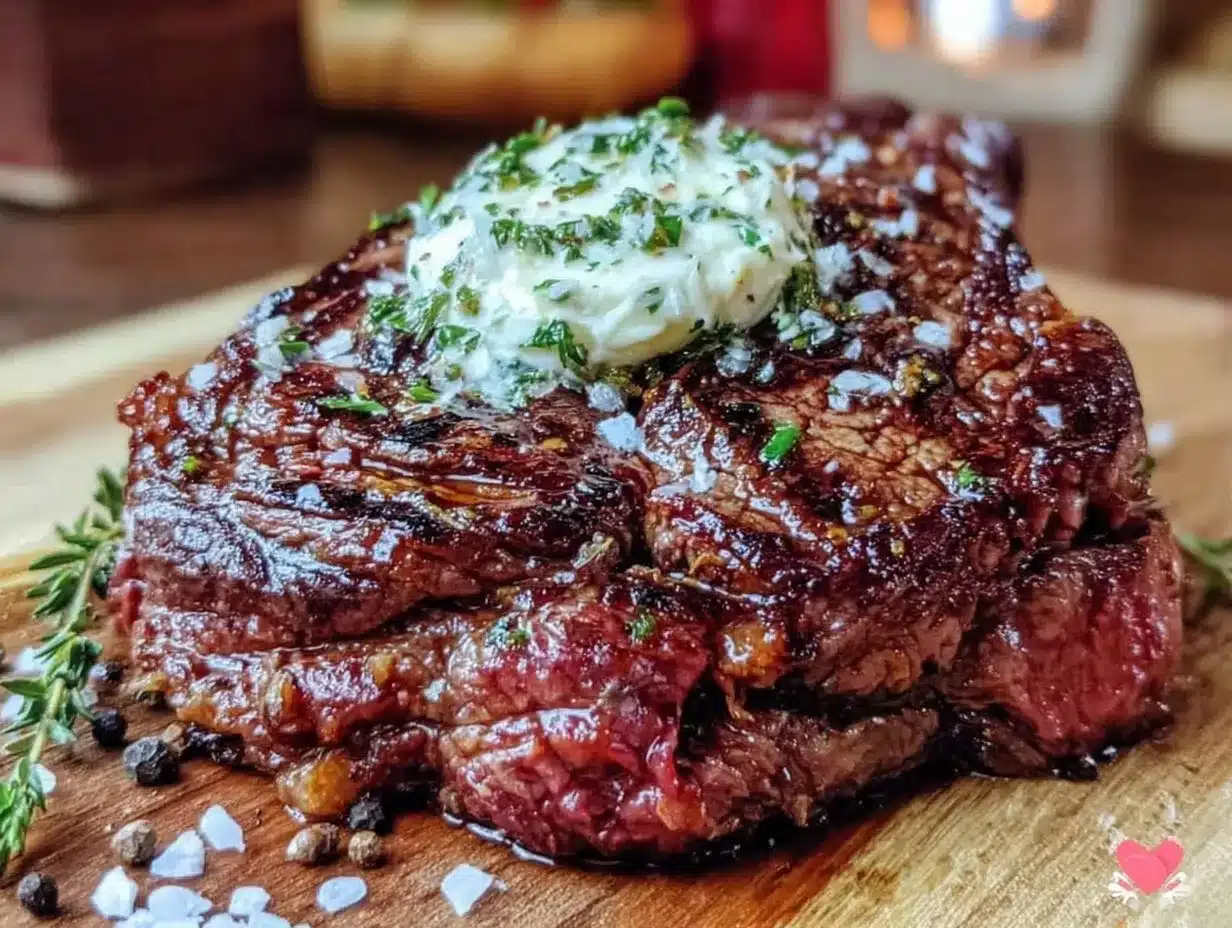
- Preheat your oven to 275°F (135°C). This low temperature ensures gentle cooking for even doneness. Place a wire rack on a rimmed baking sheet.
- Season the ribeye generously. Pat the steak dry with paper towels, then sprinkle kosher salt and freshly ground black pepper on all sides. Don’t be shy; the salt helps form a crust later.
- Place the steak on the wire rack. This setup allows air to circulate, promoting even cooking. Transfer the baking sheet to the oven.
- Slow cook the steak. Roast the ribeye until it reaches an internal temperature of about 120°F (49°C) for medium-rare, roughly 30-40 minutes depending on thickness. Use an instant-read thermometer to check. The meat should feel warm but still soft when pressed gently.
- While the steak cooks, prepare the garlic herb butter. In a small bowl, mix softened butter with minced garlic, chopped rosemary, and thyme. Set aside at room temperature.
- Heat a cast iron skillet over high heat. Add olive oil and wait until it shimmers and just starts to smoke—this is key for a perfect sear.
- Sear the steak. Transfer the ribeye to the hot skillet. Sear each side for about 1-2 minutes until a deep brown crust forms. Don’t move it around—let it develop that caramelized surface.
- Add the garlic herb butter. Spoon the butter on top of the steak while it’s in the skillet. As it melts, tilt the pan slightly and use a spoon to baste the steak repeatedly for about 30 seconds. This locks in flavor and adds richness.
- Rest the steak. Remove the ribeye from the skillet and let it rest on a cutting board for 5-10 minutes. Resting allows juices to redistribute, keeping the steak juicy.
- Slice and serve. Cut against the grain into thick slices, and spoon any leftover garlic herb butter over the top. Enjoy immediately.
Pro tip: If your steak hits the oven temperature but seems pale, don’t worry—the sear will fix that. Also, if you don’t hit that exact 120°F in the oven, err on the lower side since searing will raise the temperature a bit more.
Cooking Tips & Techniques
The reverse sear technique is a bit of a game-changer, but like any method, it has its quirks. Here are some tips I picked up along the way:
- Patience is your friend. Cooking the steak low and slow before searing means less stress and better control over doneness.
- Don’t skip the resting. I once rushed this step and ended up with juices spilling all over the plate instead of staying in the meat. Resting keeps things juicy and tender.
- Use the right pan. Cast iron is ideal, but if you only have stainless steel, preheat it thoroughly and add a little oil to prevent sticking.
- Season generously. Salt is critical for flavor and crust. I learned the hard way that under-seasoning leads to a bland steak.
- Thermometer is your best friend. Guessing leads to overcooked or undercooked steaks. I recommend a quick-read digital thermometer for accuracy.
- Multitask during the slow cook. While the steak is in the oven, it’s a perfect time to prep sides or whip up a fresh salad, like the tangy fresh southwest chipotle salad I love for contrast.
Variations & Adaptations
This recipe is quite flexible, so feel free to make it your own!
- Herb variations: Swap rosemary and thyme for sage or tarragon for a different aromatic profile. I once tried a combo of oregano and basil for a Mediterranean twist that worked great.
- Butter mix-ins: Add a splash of lemon juice or a pinch of smoked paprika to the garlic butter for an extra layer of flavor.
- Dietary adaptations: For a dairy-free version, use coconut oil or vegan butter in place of the butter. The flavor changes slightly but still delicious.
- Cooking methods: If you don’t have an oven, you can use a sous vide to slowly cook the ribeye to the desired temperature before searing. It takes longer but yields similar results.
- Spice it up: Add crushed red pepper flakes to the butter or sprinkle some smoked salt on the steak right after searing for a subtle heat kick.
One time, I tried this with a ribeye cap (spinalis dorsi) instead of a full ribeye. The reverse sear brought out incredible tenderness and rich flavor—definitely worth experimenting with!
Serving & Storage Suggestions
This perfect reverse sear ribeye steak with garlic herb butter is best served hot, straight off the cutting board, so the butter is still glossy and melty.
Pair it with simple sides that complement but don’t overpower the steak’s richness. I often serve it alongside roasted garlic mashed potatoes or a crisp green salad like the classic creamy church salad. A full-bodied red wine or a rich stout beer also pairs beautifully.
Storage: Leftover steak can be refrigerated in an airtight container for up to 3 days. To reheat, warm gently in a low oven (about 250°F / 120°C) until heated through, then quickly sear in a hot pan to refresh the crust.
Flavors actually deepen overnight, so if you can wait, the next-day steak sandwiches made with the leftovers are downright addictive.
Nutritional Information & Benefits
A 12-ounce (340g) ribeye steak contains roughly 850 calories, with about 75 grams of protein and 60 grams of fat, depending on the cut’s marbling. The garlic herb butter adds additional calories but also healthy fats.
Ribeye is a great source of iron, zinc, and B vitamins, supporting energy and immune health. Fresh herbs like rosemary and thyme provide antioxidants and anti-inflammatory benefits.
This recipe fits well within a low-carb or ketogenic diet due to its high protein and fat content, but it’s not suitable for those avoiding red meat or dairy. For a lighter version, trimming some fat or swapping butter for olive oil can reduce calories.
Conclusion
The perfect reverse sear ribeye steak with garlic herb butter is one of those recipes that turns steak night into a small celebration. It’s reliable, straightforward, and produces impressive results every time. Whether you’re cooking for yourself or a crowd, this method ensures juicy, tender meat with a gorgeous crust and rich, savory flavor.
Feel free to tweak the herbs, try different butters, or pair it with fresh sides like a vibrant southwest chipotle salad to suit your mood. It’s your kitchen, your rules, but this recipe is a solid foundation you can trust.
I hope you enjoy making it as much as I have. When you do, drop a comment below—I’d love to hear how your reverse sear ribeye steak turned out!
Frequently Asked Questions
What is the reverse sear method?
Reverse searing means cooking the steak slowly at a low temperature first, then finishing it with a high-heat sear to develop a crust. This technique helps achieve even doneness edge to edge.
Can I use this method for other cuts of steak?
Yes! Thick cuts like New York strip, filet mignon, or even thick pork chops work well with the reverse sear.
How do I know when the steak is done?
Use an instant-read thermometer. For medium-rare, aim for 120°F (49°C) before searing; the final temp after searing should be about 130°F (54°C).
Can I make the garlic herb butter ahead of time?
Absolutely. You can mix the butter and herbs a few hours or even a day ahead. Just keep it wrapped and refrigerated until ready.
Is reverse searing better than traditional searing?
It helps cook steaks more evenly and reduces the risk of burning the outside while undercooking inside. Many chefs prefer it for thicker cuts.
Pin This Recipe!
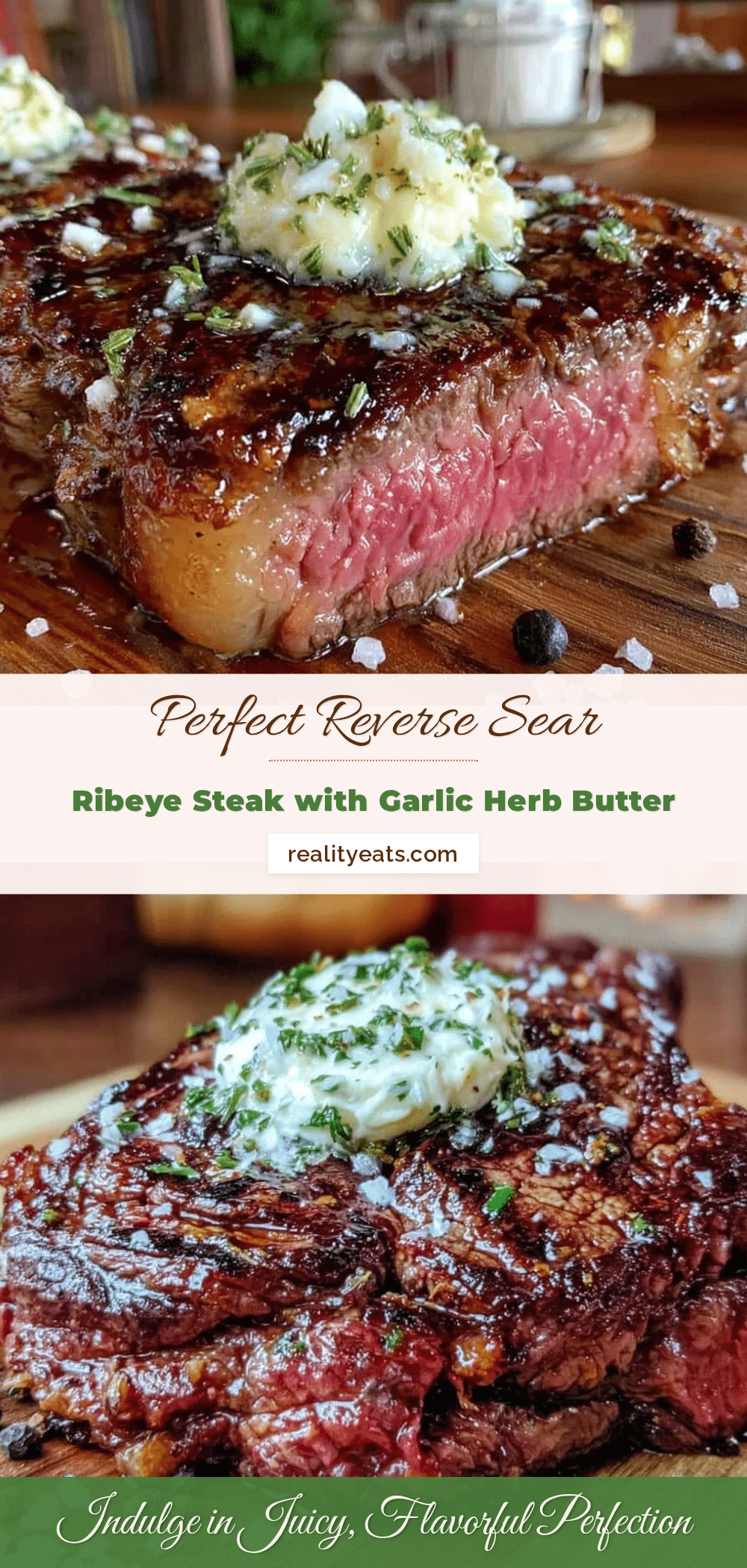
Perfect Reverse Sear Ribeye Steak Recipe with Garlic Herb Butter Guide

This recipe uses the reverse sear method to cook a thick ribeye steak slowly in the oven before searing it in a hot skillet, finished with a rich garlic herb butter for a juicy, flavorful steak with a perfect crust.
- Prep Time: 10 minutes
- Cook Time: 35 minutes
- Total Time: 45 minutes
- Yield: 1 steak (serves 1-2) 1x
- Category: Main Course
- Cuisine: American
Ingredients
- 1 thick-cut ribeye steak (bone-in or boneless, about 12–16 oz / 340–450 g, 1.5 to 2 inches thick)
- Coarse kosher salt, to taste
- Freshly ground black pepper, to taste
- 3 tablespoons unsalted butter, softened
- 2 cloves fresh garlic, minced
- 1 tablespoon fresh rosemary, finely chopped
- 1 tablespoon fresh thyme, finely chopped
- 1 tablespoon olive oil (high smoke point like avocado or light olive oil)
Instructions
- Preheat your oven to 275°F (135°C). Place a wire rack on a rimmed baking sheet.
- Pat the ribeye steak dry with paper towels. Season generously with coarse kosher salt and freshly ground black pepper on all sides.
- Place the steak on the wire rack and transfer the baking sheet to the oven.
- Slow cook the steak until it reaches an internal temperature of about 120°F (49°C) for medium-rare, approximately 30-40 minutes depending on thickness. Use an instant-read thermometer to check.
- While the steak cooks, prepare the garlic herb butter by mixing softened butter with minced garlic, chopped rosemary, and thyme in a small bowl. Set aside at room temperature.
- Heat a cast iron skillet over high heat. Add olive oil and wait until it shimmers and just starts to smoke.
- Transfer the ribeye to the hot skillet and sear each side for 1-2 minutes until a deep brown crust forms. Do not move the steak around to allow caramelization.
- Add the garlic herb butter on top of the steak while it’s in the skillet. Tilt the pan slightly and baste the steak repeatedly with the melted butter for about 30 seconds.
- Remove the steak from the skillet and let it rest on a cutting board for 5-10 minutes to allow juices to redistribute.
- Slice the steak against the grain into thick slices and spoon any leftover garlic herb butter over the top. Serve immediately.
Notes
If the steak looks pale after oven cooking, the sear will develop the crust and color. Resting the steak is crucial to keep it juicy. Use a well-seasoned cast iron skillet for best crust. For dairy-free, substitute butter with plant-based spread or ghee. Thermometer calibration is important for accuracy.
Nutrition
- Serving Size: One thick ribeye ste
- Calories: 900
- Sodium: 600
- Fat: 65
- Saturated Fat: 28
- Carbohydrates: 1
- Protein: 75
Keywords: reverse sear, ribeye steak, garlic herb butter, steak recipe, cast iron skillet, medium-rare steak, easy steak recipe