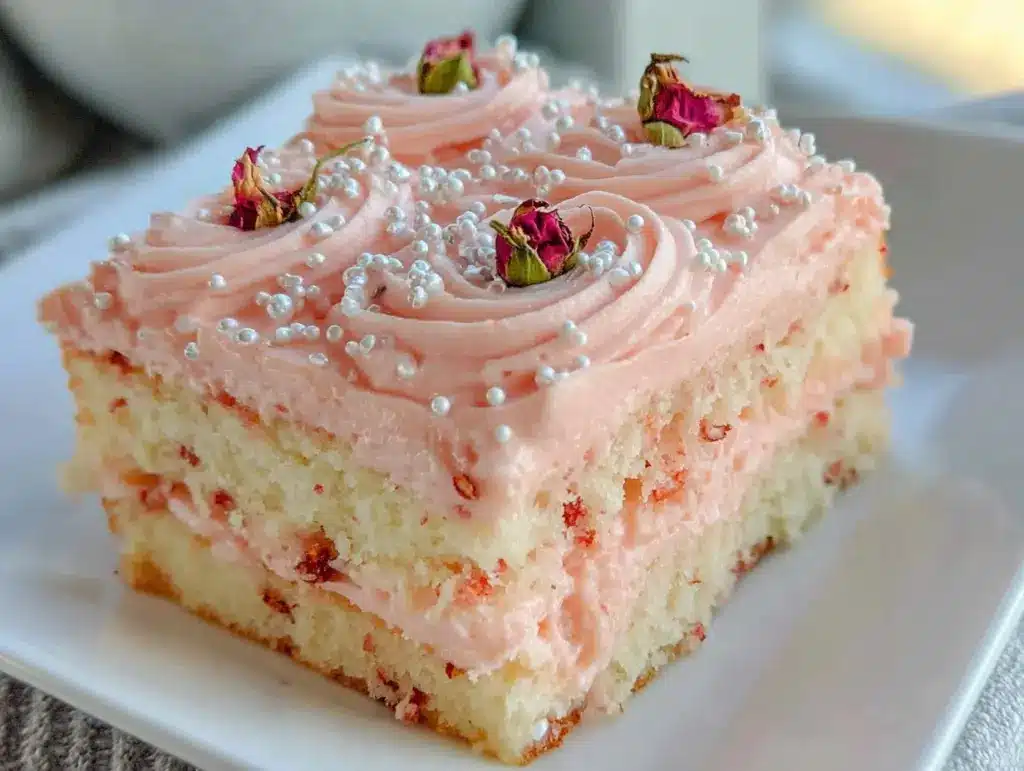
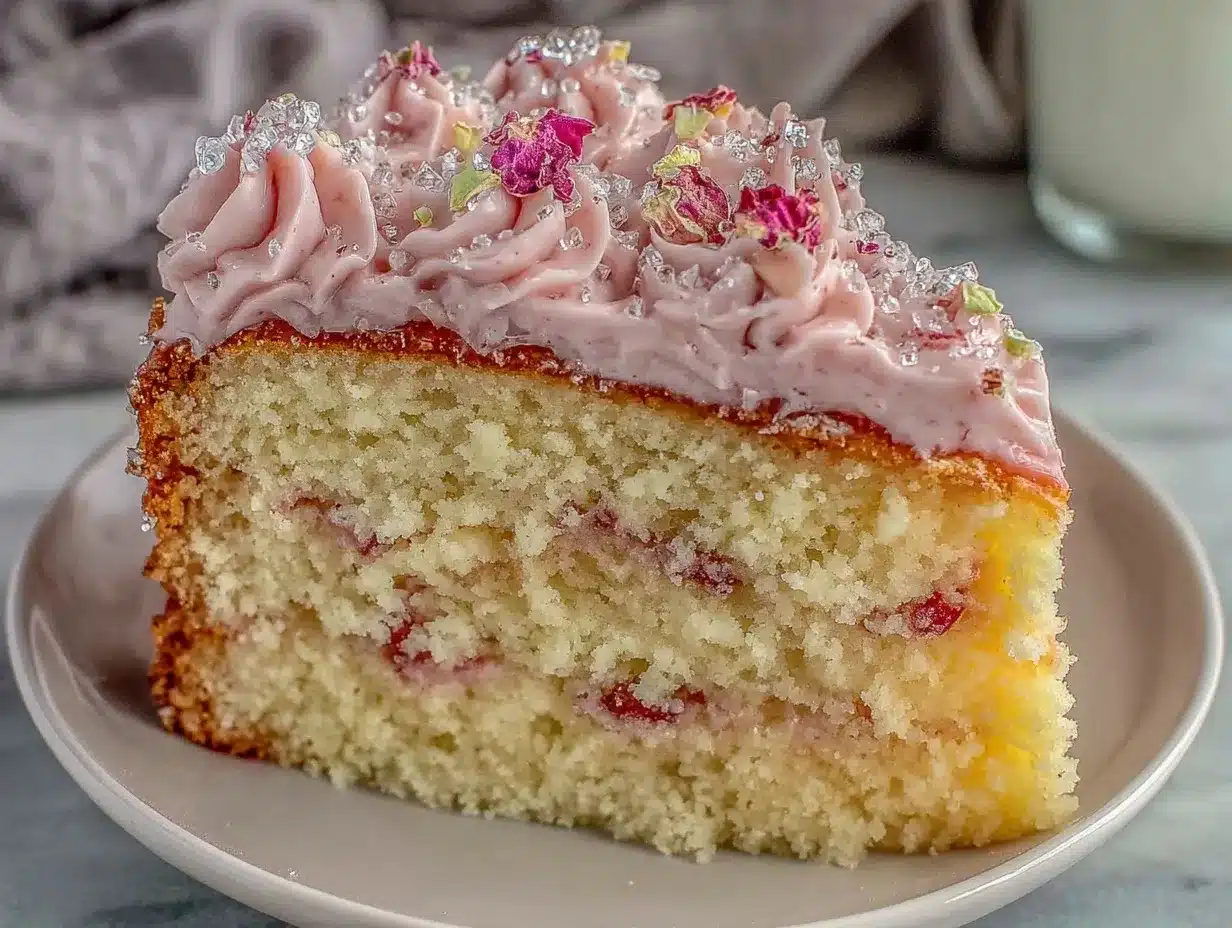
“Did you really bake a cake with champagne?” my friend asked, eyebrows raised as she eyed the delicate pink layers stacked high on my kitchen counter. Honestly, I wasn’t sure it would work myself. I had a bottle of pink champagne sitting around from a half-forgotten celebration, and one quiet evening, with the hum of the refrigerator and a soft jazz playlist in the background, I decided to take a chance. The idea of a Perfect Pink Champagne Cake with Rose Buttercream Frosting sounded fancy—maybe too fancy for a random Tuesday—but I figured, why not? It was a little experiment born from boredom and a craving for something special but effortless.
Mixing the champagne into the batter added this subtle, bubbly sweetness that I didn’t expect to love so much. The scent alone—light, floral, and a touch fruity—pulled me in as the cake baked. When it came out golden and tender, I knew I’d stumbled onto something that felt both celebratory and comfortingly familiar. Frosting it with rose buttercream? That was the kicker. The floral notes danced right alongside the champagne’s crispness, and suddenly, this cake wasn’t just a coincidence—it was a new favorite. Now, whenever I have a moment that calls for a little indulgence, this cake is my go-to, whether for a casual get-together or just because I want to treat myself to something a bit magical.
It’s funny how an unplanned recipe can sneak up and become a staple, but this one did. And I’m pretty sure it’ll sneak into your kitchen too, once you catch that first sweet, rosy bite.
Why You’ll Love This Recipe
Making a Perfect Pink Champagne Cake with Rose Buttercream Frosting isn’t just about impressing guests or marking a special occasion. From my many trials (yes, there were a few flops before this perfection), I’ve learned it’s a recipe that balances ease and elegance, making it a winner in my book. Here’s why this cake stands out:
- Quick & Easy: Whipping up the batter takes under 20 minutes, and the rose buttercream comes together just as fast.
- Simple Ingredients: No obscure items here—just classic pantry staples with a splash of pink champagne for that wow factor.
- Perfect for Celebrations: Whether it’s a birthday, bridal shower, or a casual brunch, this cake fits right in with its festive flair.
- Crowd-Pleaser: I’ve served this at gatherings where even the skeptics asked for seconds (and you know that feels pretty good).
- Unbelievably Delicious: The tender crumb and delicate rose frosting create a flavor combo that hits all the right notes—fresh, floral, and just a touch sweet.
This isn’t just another pink cake. The secret lies in the champagne’s gentle fizz, which keeps the cake moist and airy without overpowering it. The rose buttercream frosting is light, not overly sugary, with just enough floral essence to make you close your eyes on that first bite. I often think about how this recipe compares to others, like the soft sugar cookies with creamy icing I baked last month—both have that delicate sweetness that invites you back for more, but the champagne cake brings a grown-up sophistication that’s hard to resist.
Honestly, it’s the kind of dessert that turns an ordinary day into a little celebration. And that’s why it’s stuck around in my rotation, showing up more often than I expected.
What Ingredients You Will Need
This recipe uses simple, wholesome ingredients to deliver bold flavor and satisfying texture without the fuss. Most of these are pantry staples, with just a few special touches that make the cake uniquely delightful.
- All-purpose flour: 2 ½ cups (320g) – I prefer King Arthur for consistent results.
- Baking powder: 2 ½ teaspoons – for that perfect rise and fluffiness.
- Sodium bicarbonate (baking soda): ½ teaspoon – helps balance the acidity from the champagne.
- Salt: ½ teaspoon – essential for flavor boost.
- Unsalted butter: 1 cup (227g), softened – adds richness; I use Kerrygold when I want a creamier taste.
- Granulated sugar: 1 ¾ cups (350g) – sweet but not cloying.
- Large eggs: 4, room temperature – they bring structure and moisture.
- Pink champagne: 1 cup (240ml) – choose a dry or brut style for the best balance; Veuve Clicquot Rosé is a personal favorite.
- Whole milk: ½ cup (120ml), room temperature – adds moisture and tenderness.
- Pure vanilla extract: 2 teaspoons – rounds out the flavors beautifully.
- Red food coloring: 1 teaspoon (optional) – to deepen the pink hue if desired.
For the rose buttercream frosting:
- Unsalted butter: 1 cup (227g), softened – creamy base for the frosting.
- Powdered sugar: 4 cups (480g), sifted – for smooth sweetness.
- Heavy cream: 2-3 tablespoons (30-45ml) – to adjust consistency.
- Pure rose water: 1 ½ teaspoons – the star flavor note; I recommend Cortas brand for authentic aroma.
- Pink gel food coloring: a few drops – to match the cake’s rosy tint.
- Pinch of salt: balances the sweetness.
For substitutions, you can swap almond flour for a gluten-free option (but expect a slightly denser crumb), or replace whole milk with a dairy-free alternative like oat milk. If rose water isn’t your thing, a splash of vanilla or almond extract can work, but that subtle floral taste is what makes this recipe uniquely charming. And, if you want to keep things alcohol-free, try sparkling white grape juice instead of champagne—it won’t be quite the same, but still delicious.
Equipment Needed
- Two 8-inch (20cm) round cake pans: I find these work perfectly for even layers; you can use 9-inch pans if you want a thinner cake.
- Electric mixer: Stand or hand mixer for creaming butter and beating the frosting smooth.
- Mixing bowls: At least two – one for dry ingredients, one for wet.
- Rubber spatula: For folding and scraping down the sides.
- Measuring cups and spoons: Accurate measurements are key, so don’t skimp here.
- Cooling racks: To prevent soggy bottoms while the cake cools.
- Offset spatula or butter knife: For smooth frosting application.
If you don’t have cake pans, you can use a 9×13-inch pan and adjust baking time accordingly, but the layered look is part of the charm here. Also, a kitchen scale can be a game-changer for precise baking, especially with the flour and sugar. I learned the hard way that eyeballing those ingredients leads to a dry cake (not fun). If you’re on a budget, silicone spatulas and non-stick pans from brands like Wilton work great without breaking the bank.
Preparation Method
- Preheat your oven to 350°F (175°C). Grease and flour two 8-inch round cake pans or line with parchment paper. This helps the cake release cleanly.
- Mix dry ingredients: In a medium bowl, sift together 2 ½ cups (320g) all-purpose flour, 2 ½ teaspoons baking powder, ½ teaspoon baking soda, and ½ teaspoon salt. Set aside. Sifting helps prevent lumps and ensures even mixing.
- Cream butter and sugar: In a large bowl, beat 1 cup (227g) unsalted softened butter with 1 ¾ cups (350g) sugar using an electric mixer on medium speed for about 3-4 minutes, until light and fluffy. This step traps air, giving your cake a tender crumb.
- Add eggs one at a time: Beat in 4 large eggs, room temperature, one after the other, ensuring each is fully incorporated before adding the next. Scrape down the sides to avoid uneven mixing.
- Combine liquids: In a separate bowl or large measuring cup, mix 1 cup (240ml) pink champagne, ½ cup (120ml) whole milk, and 2 teaspoons vanilla extract.
- Alternate adding dry and wet ingredients: With mixer on low, add the dry ingredients in three additions, alternating with the champagne mixture in two additions. Begin and end with the dry ingredients. Mix just until combined—overmixing can make the cake dense.
- Add food coloring: If you want a deeper pink color, stir in 1 teaspoon red food coloring now. A little goes a long way.
- Divide batter evenly: Pour the batter into the prepared pans, smoothing the tops with a spatula. I usually weigh the pans with batter to make sure the layers bake evenly.
- Bake: Place pans in the oven and bake for 30-35 minutes. Check doneness by inserting a toothpick into the center—it should come out clean or with a few moist crumbs.
- Cool: Let cakes cool in the pans for 10 minutes, then turn out onto wire racks to cool completely before frosting. Patience here is key to avoid melting the buttercream.
- Make the frosting: Beat 1 cup (227g) softened unsalted butter on medium speed until creamy (about 2 minutes). Gradually add 4 cups (480g) powdered sugar, mixing on low until incorporated. Add 2-3 tablespoons heavy cream and 1 ½ teaspoons rose water, then beat on high for 3-4 minutes until light and fluffy. Add a pinch of salt and a few drops of pink gel food coloring; mix until color is even.
- Assemble the cake: Place one cake layer on your serving plate. Spread a generous layer of rose buttercream over it. Top with the second layer and frost the top and sides evenly. Use an offset spatula for a smooth finish or a rustic look—both work!
- Chill and serve: Refrigerate for at least 30 minutes to set the frosting, then slice and enjoy. The cake tastes even better the next day as the flavors meld.
Cooking Tips & Techniques
When making this Perfect Pink Champagne Cake with Rose Buttercream Frosting, a few tricks can save you from common pitfalls. First, always use room temperature eggs and milk—this helps the batter emulsify better, giving you a fluffier, moist crumb. I once tried cold eggs straight from the fridge and ended up with a lumpy batter, which was frustrating.
Also, don’t rush the creaming of butter and sugar. The lightness you achieve here traps air that expands in the oven, producing that tender texture we all love. I’ve found that mixing this step for at least 3 minutes makes a noticeable difference.
When combining wet and dry ingredients, folding gently and avoiding overmixing is crucial. Overworked batter turns tough, and nobody wants that. If you see streaks of flour, a few gentle folds will do; resist the urge to keep stirring.
For the rose buttercream, adding heavy cream gradually lets you control the frosting’s consistency—too thin, and it won’t hold up; too thick, and it’s hard to spread. I like to chill my frosting briefly if it gets too soft, especially in warm kitchens.
Last but not least, patience during cooling is your friend. Frosting a warm cake melts the buttercream and turns your masterpiece into a mess. I’ve learned this the hard way, so I always wait until the cake layers are completely cool.
If you’re interested in other crowd-pleasing recipes with a similar fuss-free vibe, you might enjoy the crispy ham and cheese sticks I made for last month’s gathering—easy to whip up and always a hit.
Variations & Adaptations
This cake is wonderfully versatile, so you can tweak it to fit different tastes or dietary needs. Here are a few ways I’ve played around with the base recipe:
- Gluten-free version: Swap all-purpose flour for a 1:1 gluten-free baking blend. The texture will be slightly different but still delicious.
- Non-alcoholic option: Replace pink champagne with sparkling white grape juice for the same bubbly lift without the alcohol.
- Seasonal twist: Add fresh raspberries or strawberries between layers for a burst of summer flavor. This pairs beautifully with the rose frosting.
- Flavor swap: If rose water isn’t your favorite, try lavender or orange blossom water for a different floral note.
- Chocolate lovers: Mix ¼ cup (25g) cocoa powder into the dry ingredients for a subtle pink-chocolate combo—surprisingly good!
Once, I tried adding a thin layer of homemade strawberry jam under the frosting, which added a nice tangy contrast. It wasn’t traditional, but it gave the cake a fresh, fruity surprise that guests loved.
Serving & Storage Suggestions
The Perfect Pink Champagne Cake with Rose Buttercream Frosting is best served at room temperature to fully enjoy the flavors and creamy texture. Slice it with a sharp, serrated knife for clean edges. I like to present it on a pretty cake stand, garnished with edible rose petals or fresh berries for an elegant touch.
This cake pairs well with light beverages like sparkling water with lemon or a crisp rosé wine, making it a great finish to a brunch or dinner party. If you want to add a savory note to your event, consider pairing it alongside a fresh salad like the fresh southwest chipotle salad for a balanced menu.
Store leftover cake tightly covered in the refrigerator for up to 4 days. For longer storage, freeze individual slices wrapped in plastic and foil for up to 3 months. When ready to eat, thaw overnight in the fridge and bring to room temperature before serving. The flavors actually deepen after a day or two, so if you can wait, it’s worth it!
Nutritional Information & Benefits
This cake offers a moderate indulgence, with each slice providing roughly 350-400 calories depending on portion size. The use of champagne adds minimal alcohol content but contributes to the moist texture without extra fat.
Key ingredients like eggs and butter provide protein and healthy fats, while the rose water adds no calories but a lovely aromatic touch. Using real unsalted butter and quality vanilla extract ensures flavor without artificial additives.
For dietary considerations, this recipe can be adapted to gluten-free or dairy-free versions by swapping flour blends and milk alternatives, respectively. Those sensitive to alcohol can opt for the sparkling juice substitute to keep it family-friendly.
Personally, I appreciate that this cake feels like a treat without being overly heavy or sickly sweet, making it a satisfying choice for special occasions or whenever I want a little luxury without going overboard.
Conclusion
The Perfect Pink Champagne Cake with Rose Buttercream Frosting has become one of my favorite recipes to make when I want something that feels special but isn’t complicated. Its tender crumb, light floral frosting, and subtle sparkle make it stand out from the usual cakes I bake. Whether you’re celebrating a milestone or just craving a sweet pick-me-up, this cake adapts beautifully.
Feel free to tweak the flavors or presentation to suit your style—I love hearing how others make it their own. I hope this recipe brings as much joy to your kitchen as it did to mine (and trust me, it’s worth the little champagne gamble!).
When you try it, let me know how it turns out or if you added your personal twist. Sharing your experience is part of what makes cooking so rewarding. Here’s to many sweet moments ahead!
FAQs
- Can I use regular white wine instead of pink champagne?
Yes, but the flavor will be less bubbly and floral. Pink champagne adds a unique touch you won’t quite get with white wine. - How do I store leftover cake?
Store wrapped tightly in the fridge for up to 4 days or freeze slices for longer storage. - Is rose water necessary in the frosting?
Rose water is key for that signature floral note, but you can substitute with vanilla or almond extract if preferred. - Can I make this cake dairy-free?
Absolutely. Use dairy-free butter and milk alternatives like coconut or oat milk. - What’s the best way to get an even pink color?
Adding a small amount of red or pink gel food coloring helps intensify the hue without affecting flavor.
Pin This Recipe!
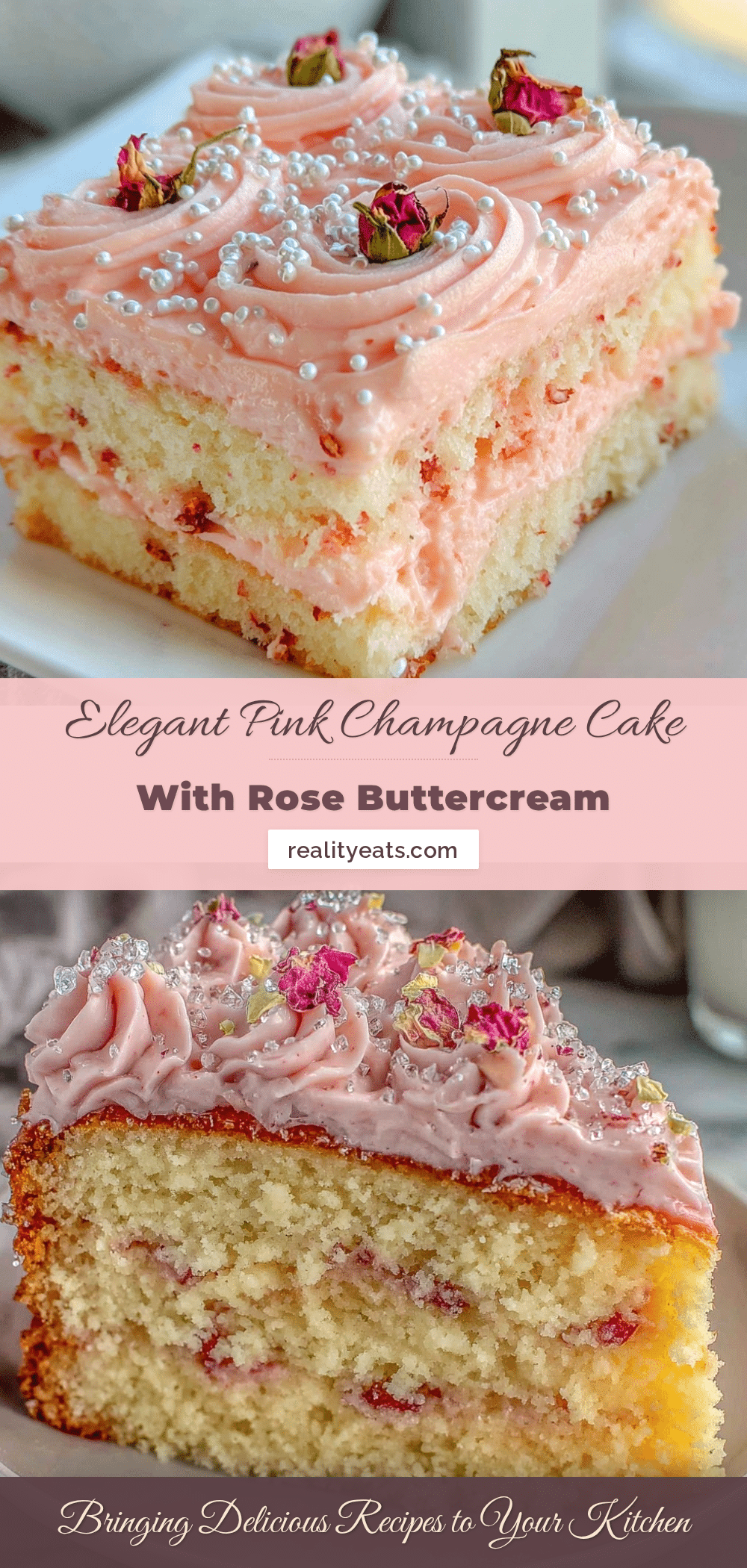
Perfect Pink Champagne Cake Recipe with Easy Rose Buttercream Frosting

A delicate and elegant pink champagne cake with a light, floral rose buttercream frosting. This cake is moist, airy, and perfect for celebrations or a special treat.
- Prep Time: 20 minutes
- Cook Time: 30-35 minutes
- Total Time: 55-60 minutes
- Yield: 12 servings 1x
- Category: Dessert
- Cuisine: American
Ingredients
- 2 ½ cups (320g) all-purpose flour
- 2 ½ teaspoons baking powder
- ½ teaspoon baking soda (sodium bicarbonate)
- ½ teaspoon salt
- 1 cup (227g) unsalted butter, softened
- 1 ¾ cups (350g) granulated sugar
- 4 large eggs, room temperature
- 1 cup (240ml) pink champagne (dry or brut style)
- ½ cup (120ml) whole milk, room temperature
- 2 teaspoons pure vanilla extract
- 1 teaspoon red food coloring (optional)
- For the rose buttercream frosting:
- 1 cup (227g) unsalted butter, softened
- 4 cups (480g) powdered sugar, sifted
- 2–3 tablespoons (30-45ml) heavy cream
- 1 ½ teaspoons pure rose water
- A few drops pink gel food coloring
- Pinch of salt
Instructions
- Preheat oven to 350°F (175°C). Grease and flour two 8-inch round cake pans or line with parchment paper.
- In a medium bowl, sift together flour, baking powder, baking soda, and salt. Set aside.
- In a large bowl, beat softened butter and sugar with an electric mixer on medium speed for 3-4 minutes until light and fluffy.
- Add eggs one at a time, beating well after each addition and scraping down the sides.
- In a separate bowl, combine pink champagne, whole milk, and vanilla extract.
- With mixer on low, alternately add dry ingredients in three additions and champagne mixture in two additions, beginning and ending with dry ingredients. Mix just until combined.
- If desired, stir in red food coloring for a deeper pink color.
- Divide batter evenly between prepared pans and smooth tops.
- Bake for 30-35 minutes or until a toothpick inserted in the center comes out clean or with a few moist crumbs.
- Cool cakes in pans for 10 minutes, then turn out onto wire racks to cool completely.
- To make frosting, beat softened butter on medium speed until creamy (about 2 minutes). Gradually add powdered sugar on low speed until incorporated.
- Add heavy cream and rose water, then beat on high for 3-4 minutes until light and fluffy.
- Add pinch of salt and pink gel food coloring; mix until color is even.
- Assemble cake by placing one layer on a serving plate, spreading a generous layer of frosting, topping with second layer, and frosting top and sides evenly.
- Chill cake in refrigerator for at least 30 minutes to set frosting before slicing and serving.
Notes
Use room temperature eggs and milk for better batter emulsification. Do not overmix batter to avoid toughness. Chill frosting if too soft. Let cake layers cool completely before frosting to prevent melting buttercream. For gluten-free, substitute flour with gluten-free blend. For non-alcoholic version, use sparkling white grape juice instead of champagne.
Nutrition
- Serving Size: 1 slice (1/12th of c
- Calories: 375
- Sugar: 38
- Sodium: 210
- Fat: 18
- Saturated Fat: 11
- Carbohydrates: 52
- Fiber: 1
- Protein: 4
Keywords: pink champagne cake, rose buttercream frosting, celebration cake, floral cake, easy cake recipe, party dessert