“You really don’t need a fancy grill to nail a steak that’s juicy and tender,” my buddy Mark said over the phone one evening. I was skeptical. We’d been texting about the best way to cook ribeye, and he swore by this method called reverse searing. Honestly, I’d always just done the traditional sear-first method, thinking it was the only way to get that crusty, flavorful finish. But Mark’s enthusiasm was contagious, and I figured, why not? That night, I pulled out a thick ribeye from the fridge and gave it a shot.
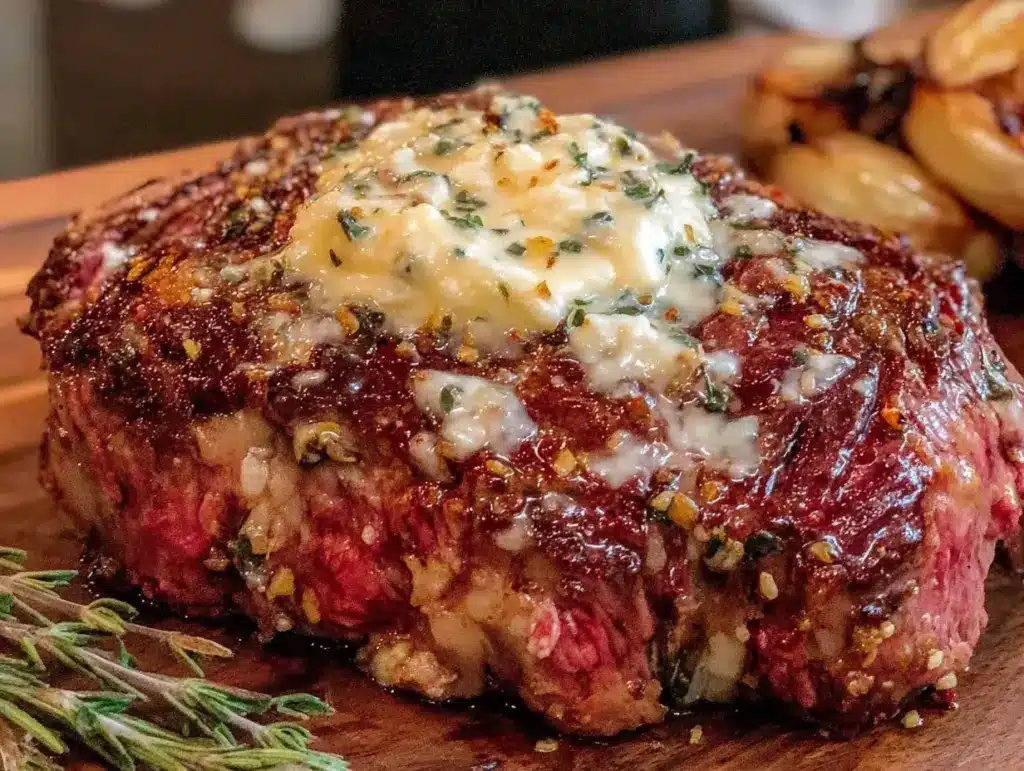
Cooking the steak low and slow in the oven before finishing it off on the stovetop changed everything. The heat distribution was so even, the steak cooked through perfectly without that dreaded overcooked edge. Then, I added a dollop of homemade garlic herb butter melting over the top—wow, that was the game-changer. The butter’s fresh herbs and garlic brought a whole new level of richness and aroma that made me pause and savor each bite.
Since then, the perfect reverse seared ribeye with garlic herb butter has become my go-to recipe for when I want a restaurant-quality steak at home without fussing over an outdoor grill. It’s honestly one of those meals that make you realize good cooking isn’t about complicated techniques, but thoughtful ones—and a bit of patience. This recipe stuck with me because it’s comfort food at its finest, but also a bit of a treat, the kind of dish that turns any evening into something quietly special.
Why You’ll Love This Recipe
After testing the perfect reverse seared ribeye recipe several times (yeah, I made it three times in one week, no regrets!), I’m convinced this method is the best way to get a steak that’s juicy, tender, and packed with flavor. Here’s why this recipe stands out:
- Quick & Easy: The hands-on time is surprisingly low—about 10 minutes of active cooking, making it perfect for busy weeknights or last-minute dinner plans.
- Simple Ingredients: You don’t need anything fancy. Just a good quality ribeye, salt, pepper, and a few pantry staples for the garlic herb butter. I usually pick up steaks from my local butcher for the best marbling.
- Perfect for Special Occasions: Whether it’s a quiet dinner for two or a celebratory meal, this steak impresses without the stress.
- Crowd-Pleaser: Friends and family always ask for the recipe after tasting this. It’s a safe bet when you want to wow guests with minimal effort.
- Unbelievably Delicious: The garlic herb butter adds a fresh, buttery finish that lifts the whole dish beyond your average steak dinner.
What sets this reverse seared ribeye apart is the technique—cooking the steak slowly first, then searing it just right for that perfect crust. Plus, the homemade garlic herb butter uses fresh rosemary and thyme, which I find gives it a more vibrant flavor than dried herbs. It’s the kind of steak that makes you close your eyes after the first bite (and maybe reach for a side like my creamy baked mac and cheese to go with it).
What Ingredients You Will Need
This recipe uses simple, wholesome ingredients to deliver bold flavor and a satisfying texture without fuss. Most of these are pantry staples or easy to find at your local market.
- Ribeye steak: 1 thick-cut ribeye, about 1.5 to 2 inches thick (look for good marbling; USDA Choice or Prime works best)
- Salt: Kosher salt or sea salt, coarse grind preferred (helps form a nice crust)
- Black pepper: Freshly cracked for best flavor
For the garlic herb butter:
- Unsalted butter: 4 tablespoons, softened (I like Plugrá for its creaminess)
- Fresh garlic: 2 cloves, minced (fresh beats jarred here every time)
- Fresh rosemary: 1 teaspoon, finely chopped
- Fresh thyme: 1 teaspoon, finely chopped
- Lemon zest: From ½ lemon (adds brightness)
- Salt and pepper: To taste
You can swap the ribeye with a thick New York strip if you prefer a leaner cut, or use almond flour to dust the steak lightly before searing for a subtle crust variation. If fresh herbs aren’t available, frozen herbs will do in a pinch, but fresh really makes the difference here.
Equipment Needed
- Oven-safe wire rack and baking sheet: For even heat circulation around the steak in the oven. If you don’t have a wire rack, you can use a cooling rack that fits on a baking sheet.
- Cast iron skillet or heavy-bottomed pan: Essential for getting that sear. I’ve tried stainless steel pans, but cast iron retains heat better, giving you a more consistent crust.
- Instant-read meat thermometer: This is a game-changer for perfect doneness without cutting into the steak.
- Small bowl and spoon: For mixing the garlic herb butter.
- Knife and cutting board: For prepping herbs and steak.
If you’re on a budget, a simple wire cooling rack and disposable foil pan work fine for the oven step. And if you don’t have a thermometer, you can test doneness by touch, but it takes some practice. I remember the first time I winged it—it was a bit too rare for my liking.
Preparation Method
- Preheat your oven to 275°F (135°C). This low temperature ensures even cooking without drying out the steak. It usually takes about 10 minutes for the oven to stabilize.
- Season the ribeye generously with salt and cracked black pepper. Don’t be shy here; the salt helps draw out moisture and forms that savory crust later. Let it sit at room temperature for 30 minutes before cooking—this helps it cook evenly.
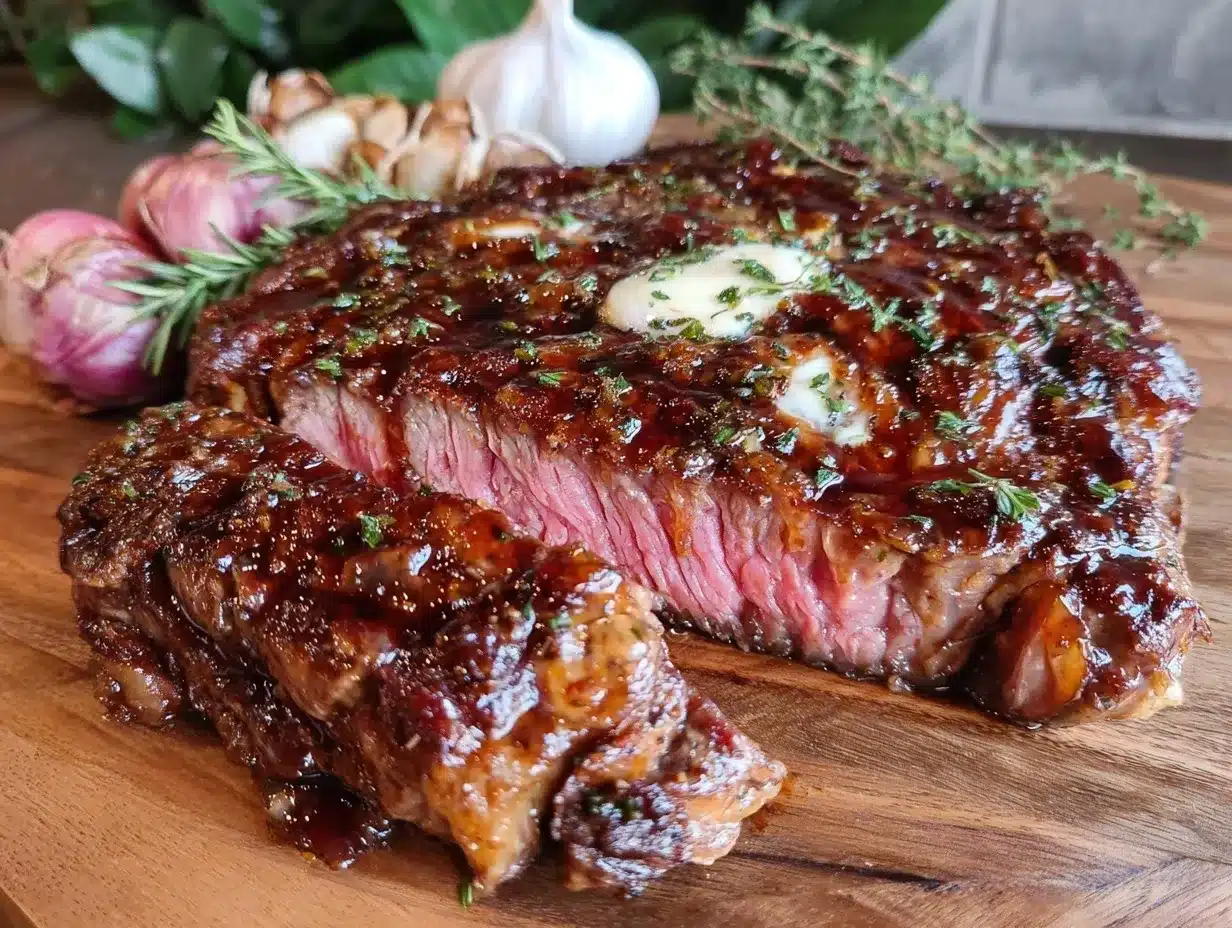
- Place the steak on a wire rack over a baking sheet. This setup allows hot air to circulate around the meat, cooking it uniformly. Pop it into the oven and roast for 20-30 minutes, depending on thickness. Use your instant-read thermometer to check the internal temperature; you’re aiming for 115°F (46°C) for medium-rare.
- While the steak is in the oven, prepare the garlic herb butter. In a small bowl, combine the softened butter, minced garlic, chopped rosemary, thyme, lemon zest, and a pinch of salt and pepper. Mix well and set aside at room temperature.
- Once the steak reaches the desired temp, remove it from the oven and let it rest for 5 minutes. Resting lets the juices redistribute, keeping the steak moist.
- Heat your cast iron skillet over high heat until smoking hot. Add a teaspoon of neutral oil with a high smoke point, like grapeseed or avocado oil.
- Sear the steak for about 1-2 minutes per side. You’re looking for a deep brown crust; don’t move it around too much. For extra flavor, sear the edges for 30 seconds each by holding the steak with tongs.
- Remove the steak from the pan and immediately top it with a generous spoonful of the garlic herb butter. The heat will melt the butter, creating a luscious sauce.
- Let the steak rest for another 5 minutes before slicing. This final rest is key for juicy bites.
Quick tip: If your butter softens too much while waiting, pop it briefly back in the fridge. Also, if you want a smoky flavor without a grill, add a few drops of liquid smoke to the butter mix.
Cooking Tips & Techniques
The reverse sear process might seem simple, but a few tricks made all the difference for me:
- Don’t rush the oven stage. Cooking the steak slowly at low heat helps it cook evenly inside without the risk of burning the outside. I’ve had friends rush this step only to end up with unevenly cooked steaks.
- Use a reliable instant-read thermometer. Guesswork is the enemy of perfect steak. I’ve burned a couple of steaks in the past by relying solely on touch.
- Resting time is non-negotiable. Cutting into the steak too soon lets all those precious juices escape.
- For the sear, get your pan screaming hot. A hot cast iron skillet is your best friend here. It creates a crust that seals in flavor and gives you that satisfying texture.
- Don’t add butter too early in the sear. Butter can burn quickly, so add it as a finishing touch to avoid bitterness.
One time, I skipped resting after the sear because I was hungry (rookie mistake), and the steak was dry. Lesson learned!
Variations & Adaptations
Want to mix things up? Here are some ways I’ve tweaked this recipe:
- Herb variations: Swap rosemary and thyme for fresh oregano or tarragon for a slightly different herbal note.
- Dietary tweaks: Use dairy-free butter alternatives to make the garlic herb butter vegan-friendly. Coconut oil with garlic and herbs works well too.
- Spicy kick: Add a pinch of smoked paprika or cayenne to the seasoning mix for some heat.
- Cooking method: If you have a sous-vide setup, finish the steak with a quick sear in a cast iron pan, then top with garlic herb butter for an ultra-precise cook.
- Flavor twist: Try adding a splash of balsamic vinegar to your butter mixture for a rich tang.
Once, I made this with a New York strip and added lemon zest and fresh parsley to the butter—turned out fantastic. You can also pair it with a fresh southwest chipotle salad for a smoky, vibrant side.
Serving & Storage Suggestions
This ribeye is best served hot off the pan with the garlic herb butter melted on top. Slice it against the grain for the most tender bites. I like to plate it with simple sides like roasted vegetables or a creamy salad like my classic creamy church salad—the cool creaminess balances the rich steak perfectly.
If you have leftovers (rare, but it happens), wrap them tightly in foil and store in the fridge for up to 3 days. Reheat gently in a low oven (250°F/120°C) to avoid drying out, then add a bit more garlic herb butter before serving.
Flavors actually deepen the next day, so sometimes I find the steak tastes even better cold or lightly warmed in sandwiches or salads.
Nutritional Information & Benefits
A 6-ounce (170g) ribeye steak with garlic herb butter contains approximately:
| Nutrient | Amount |
|---|---|
| Calories | 520 kcal |
| Protein | 42 g |
| Fat | 38 g (mostly from butter and steak marbling) |
| Carbohydrates | 1 g |
Besides being a great source of high-quality protein and iron, ribeye steak provides essential B vitamins. The fresh herbs add antioxidants and a small boost of vitamin C from the lemon zest. While this recipe is rich, it fits well into a balanced diet when paired with vegetables and whole grains.
Note: This recipe contains dairy and garlic, which may be allergens for some.
Conclusion
The perfect reverse seared ribeye with garlic herb butter is a recipe I return to again and again because it hits that sweet spot between simple and impressive. It’s approachable enough for a weeknight but special enough for a celebration. You can tweak the herbs, seasoning, or sides to suit your taste, making it truly your own.
For me, it’s a reminder that cooking doesn’t have to be complicated to be delicious. And sometimes, the best meals come from trying something new—like that first hesitant phone call about reverse searing. If you give this recipe a try, I’d love to hear how it turned out or what variations you made. Cooking is always better when shared, don’t you think?
Here’s to many more memorable meals, one perfect steak at a time.
FAQs
- What temperature should I cook my ribeye to using the reverse sear method?
Aim for an internal temperature of 115°F (46°C) in the oven before searing for a perfect medium-rare finish around 130°F (54°C). - Can I use a different cut of steak for reverse searing?
Absolutely! Thick cuts like New York strip or filet mignon work well with this method. - How do I store leftover steak to keep it juicy?
Wrap tightly in foil or airtight container and refrigerate for up to 3 days. Reheat gently in a low oven with a bit of butter. - Is garlic herb butter necessary for the recipe?
It’s not required but highly recommended for adding flavor and richness. You can skip or substitute with plain butter if preferred. - What if I don’t have a cast iron skillet?
Use any heavy-bottomed pan that gets very hot quickly, like stainless steel. Avoid non-stick pans for searing—they don’t get hot enough for a good crust.
Pin This Recipe!
Perfect Reverse Seared Ribeye Recipe with Easy Garlic Herb Butter

A simple and effective reverse sear method to cook a juicy, tender ribeye steak topped with a flavorful homemade garlic herb butter.
- Prep Time: 40 minutes
- Cook Time: 10 minutes
- Total Time: 50 minutes
- Yield: 1 serving 1x
- Category: Main Course
- Cuisine: American
Ingredients
- 1 thick-cut ribeye steak, about 1.5 to 2 inches thick
- Kosher salt or sea salt, coarse grind, to taste
- Freshly cracked black pepper, to taste
- 4 tablespoons unsalted butter, softened
- 2 cloves fresh garlic, minced
- 1 teaspoon fresh rosemary, finely chopped
- 1 teaspoon fresh thyme, finely chopped
- Lemon zest from ½ lemon
- Salt and pepper to taste
- 1 teaspoon neutral oil with high smoke point (e.g., grapeseed or avocado oil)
Instructions
- Preheat your oven to 275°F (135°C).
- Season the ribeye generously with salt and cracked black pepper. Let it sit at room temperature for 30 minutes.
- Place the steak on a wire rack over a baking sheet and roast in the oven for 20-30 minutes until the internal temperature reaches 115°F (46°C) for medium-rare.
- While the steak is in the oven, prepare the garlic herb butter by mixing softened butter, minced garlic, chopped rosemary, thyme, lemon zest, salt, and pepper in a small bowl. Set aside at room temperature.
- Remove the steak from the oven and let it rest for 5 minutes.
- Heat a cast iron skillet over high heat until smoking hot. Add a teaspoon of neutral oil.
- Sear the steak for 1-2 minutes per side until a deep brown crust forms. Sear the edges for 30 seconds each by holding the steak with tongs.
- Remove the steak from the pan and immediately top with a generous spoonful of garlic herb butter to melt.
- Let the steak rest for another 5 minutes before slicing against the grain and serving.
Notes
Use fresh herbs for best flavor in the garlic herb butter. Resting the steak after oven cooking and after searing is essential for juicy results. If butter softens too much, chill briefly before serving. Liquid smoke can be added to butter for smoky flavor. Use a thermometer for perfect doneness.
Nutrition
- Serving Size: 6-ounce (170g) ribey
- Calories: 520
- Fat: 38
- Carbohydrates: 1
- Protein: 42
Keywords: reverse sear, ribeye steak, garlic herb butter, steak recipe, easy steak, cast iron skillet, juicy steak